How to Choose PVC Trim Profiles for Different Building Applications
- Share
- From
- www.boardwaybuilding.com
- publisher
- Boardway
- Issue Time
- Jul 26,2026
Summary
Learn how to choose PVC trim profiles for windows, doors, rooflines, corners, and interior finishing. Explore profile dimensions, finishes, and custom sourcing.

PVC trim profiles are used in a wide range of building applications, from window and door surrounds to exterior corners, roofline details, and interior decorative finishing. Although these products may look similar at first glance, their shapes, dimensions, and design features can differ significantly depending on where they are used.
For building material distributors, importers, contractors, and project buyers, choosing the right PVC trim profile involves more than selecting an attractive design. The profile must match the intended application, fit the surrounding building components, and meet the project's dimensional and appearance requirements.
This guide explains how to match PVC trim profiles to different building applications, which specifications to confirm before purchasing, and when standard or custom profiles may be the better option.
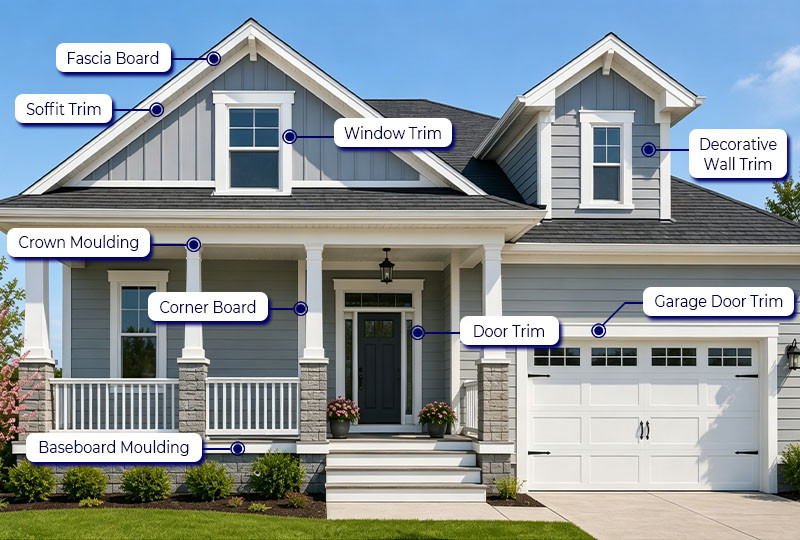
1. Match PVC Trim Profiles to Different Building Applications
The first step in selecting a PVC trim profile is to identify the building area where it will be used. Different applications call for different profile shapes, dimensions, and finishing effects.
Window and Door Surrounds
Window and door surrounds are common applications for PVC trim. These profiles frame openings, create clean transitions between building components, and contribute to the overall appearance of a facade.
Common options include window casing, door casing, and brick moulding. Sill profiles may also be used where a projecting or shaped lower window detail is required.
When selecting profiles for these applications, buyers should consider the width of the visible trim, the dimensions of the window or door opening, and the architectural style of the building. A narrow casing may suit a simple, contemporary design, while a wider or more decorative profile may be preferred for a more traditional appearance.
The profile should also be compatible with the surrounding components and the project's specified installation details. Before placing a bulk order, confirm the cross-sectional dimensions and required lengths rather than relying on the product name alone.
Roofline, Fascia, and Soffit Applications
Roofline areas often incorporate trim boards and other finishing components to create a consistent appearance along roof edges and eaves. PVC trim boards may be selected for fascia details, while suitable boards or profiles can be used for other finishing applications, depending on the building design.
For these applications, dimensional consistency and coordination with adjacent components are important. Buyers should confirm the required board width, thickness, length, and visible finish. They should also consider the intended exposure conditions and verify that the selected product meets the project's requirements for exterior use.
It is important to distinguish between a flat PVC trim board and a shaped moulding profile. A trim board provides a relatively flat finishing surface, while a moulding has a defined cross-sectional shape designed to create a particular edge or decorative detail. The appropriate choice depends on the building detail and the appearance required.
Exterior Corners and Wall Details
Exterior corners and wall transitions may require PVC corner boards, trim boards, or specially shaped profiles. These components can help create defined edges and consistent finishing lines around exterior wall sections.
When choosing a corner profile or board, consider the width of the visible faces, the dimensions of the corner, and how the product will align with the adjacent wall finishes. The profile should provide the intended visual coverage without creating unnecessary gaps or mismatched edges.
For projects involving multiple buildings or large developments, consistent profile dimensions and appearance across different sections are particularly important. Buyers should confirm that the selected product matches the project drawings and the specified finish before ordering in volume.
Interior Walls, Ceilings, and Decorative Finishing
PVC moulding profiles can also be used for interior decorative details. Depending on the design, common options include crown moulding, baseboard, cove moulding, quarter round, and chair rail.
Crown moulding is commonly associated with the transition between walls and ceilings. Baseboards provide a finishing detail along the lower edge of a wall, while quarter round and cove profiles can be used for specific transitions or decorative effects. Chair rails create horizontal lines on interior walls and may form part of a traditional decorative scheme.
The main selection factors are profile shape, visible dimensions, and compatibility with the surrounding interior design. Simple profiles may suit contemporary spaces, whereas more elaborate mouldings can be appropriate for traditional or decorative interiors.
For distributors and building material suppliers, offering a range of profile shapes and sizes can help serve customers with different design preferences. However, product selection should be based on actual market demand and project requirements rather than the number of available designs alone.
2. Key Factors to Consider When Selecting a PVC Trim Profile
Once the application has been identified, buyers should evaluate the profile's physical specifications and appearance. These details help reduce mismatches between the ordered product and the intended project.
Profile Shape and Cross-Section
The cross-section is one of the most important features of a PVC trim profile. It determines the product's visible contour and how its shape relates to surrounding components.
Two profiles may have similar names but different cross-sections. For this reason, a product name or general application description may not be sufficient for accurate identification.
When sourcing PVC moulding, buyers should review the profile drawing, product sample, or detailed product image. For custom requirements, a dimensioned drawing showing the cross-section is especially useful. It allows the buyer and manufacturer to confirm the intended shape before discussing production.
Dimensions and Length Requirements
Dimensional requirements should be confirmed before selecting a final product. Depending on the application, important specifications may include profile width, thickness, overall cross-sectional dimensions, and product length.
Buyers should also clarify whether the dimensions refer to the full profile or only to its visible face. This distinction can matter when comparing products from different suppliers.
Projects serving different markets may use metric or imperial measurements. Confirming the unit of measurement and the required dimensional tolerances can help avoid misunderstandings during quotation, sampling, and production.
For bulk orders, buyers should provide a clear specification sheet whenever possible. If the project uses an existing profile, a physical sample or drawing can help establish a common reference.
Surface Finish and Appearance
The surface finish influences the visual effect of PVC trim and its compatibility with the overall building design. Depending on the product and available manufacturing options, finishes may include smooth or matte surfaces and selected textured or woodgrain effects.
A smooth finish may suit a clean, understated appearance, while a woodgrain texture may be preferred for projects seeking a more traditional decorative effect.
When comparing finishes, buyers should consider the intended application, the appearance of adjacent building materials, and any project-specific finishing requirements. They should also confirm which surface options are available for the selected profile rather than assuming every finish can be applied to every design.
For projects requiring a consistent appearance across multiple locations, it is advisable to confirm the finish using a physical sample before approving a bulk order.
Intended Use and Environmental Conditions
A PVC trim profile should be selected according to its intended application and the conditions in which it will be used.
For exterior projects, buyers should identify the expected exposure conditions and confirm that the product meets the relevant project specifications. For interior applications, the required appearance, dimensions, and compatibility with surrounding materials may be the primary considerations.
The term "PVC trim" alone does not establish that every product is suitable for every environment. Buyers should request relevant product information and verify any specific performance requirements before making a purchasing decision.
Where local building codes, project specifications, or other applicable standards apply, these requirements should be confirmed with the responsible project team.

3. Standard PVC Trim Profiles vs. Custom Profiles
Standard and custom PVC trim profiles serve different purchasing needs. The better option depends on the project design, required dimensions, order quantity, and sourcing plan.
When to Choose Standard PVC Trim Profiles
Standard profiles are often a practical choice when an existing design meets the project's requirements. They can be particularly suitable for distributors, wholesalers, and buyers supplying recurring construction or renovation projects.
Using an established profile can simplify product identification and make it easier to compare specifications across suppliers. It may also help buyers build a product range around commonly requested designs.
Before selecting a standard profile, confirm the exact cross-section, dimensions, surface finish, and available lengths. Do not assume that products with similar names or photographs are dimensionally identical.
When to Consider Custom PVC Trim Profiles
Custom profiles may be worth considering when a project's design cannot be matched by the available standard range. This may involve a particular cross-sectional shape, specific dimensions, or a decorative detail developed for a building material brand or project.
Custom development generally requires more detailed communication between the buyer and manufacturer. Depending on the design, the process may involve drawing review, tooling evaluation, sample approval, and confirmation of production requirements.
To assess a custom request, buyers should prepare as much information as possible, including:
Providing clear technical information at the beginning helps the manufacturer evaluate the request more effectively. The feasibility, development process, and commercial conditions should then be confirmed for the specific project.

4. What B2B Buyers Should Confirm Before Placing an Order
Selecting a suitable profile is only one part of the sourcing process. For importers, distributors, building material brands, and project buyers, clear product specifications are equally important for quotation, production, and repeat orders.
Confirm the product specification. Make sure the profile name or reference number, cross-section, dimensions, length, and surface finish are clearly identified. Drawings and samples can help prevent confusion between similar designs.
Check the required quantity and supply format. Confirm the order quantity, packaging requirements, and any length or labeling requirements relevant to distribution. If products will be sold under a private label, discuss the applicable packaging and marking details in advance.
Approve the appearance and dimensions. For new products or customized designs, confirm the sample or drawing before proceeding with mass production. Any agreed specifications should be documented so that both parties use the same reference.
Discuss customization requirements early. If the project requires a non-standard profile, provide the technical details during the initial inquiry. The manufacturer can then evaluate the design and clarify the next steps.
Plan for repeat purchasing. Distributors and wholesalers may need to reorder the same profile over time. Keeping a clear record of product references, dimensions, finish requirements, and approved samples can help simplify future orders.
These steps are particularly useful for buyers managing several profile types or supplying multiple customers with different requirements.
5. Sourcing PVC Trim Profiles from Boardway
Boardway manufactures PVC trim boards and moulding products for building material applications. With more than 80 PVC trim and moulding profiles in its product range, Boardway offers options for buyers sourcing decorative and finishing components for different projects.
For distributors, importers, wholesalers, and building material brands, the available range provides a starting point for identifying profiles that match their product requirements. Buyers can review existing designs and confirm the relevant dimensions, surface finish, and supply details with the Boardway team.
When a standard profile does not meet a project's requirements, buyers can share a drawing or physical sample for evaluation. The feasibility of customization, including any development requirements, can then be discussed based on the proposed design and order details.
If you are sourcing PVC trim profiles for a building project or developing a product range for your market, prepare the intended application, required dimensions, estimated quantity, and preferred finish before contacting the manufacturer. These details help establish a clearer basis for product selection and quotation.
Explore Boardway's PVC Trim Board & Moulding products or contact our team to discuss your sourcing requirements.

PVC Trim Board

PVC Trim Planking
Frequently Asked Questions
1. How do I choose the right PVC trim profile for a building project?
Start by identifying the intended application, such as window and door surrounds, roofline details, exterior corners, or interior decorative finishing. Then confirm the profile shape, dimensions, surface finish, and project specifications. A drawing or physical sample can help verify that the selected profile matches your requirements.
2. What is the difference between a PVC trim board and PVC moulding?
A PVC trim board is generally a flat board used for finishing or covering building details. PVC moulding has a defined cross-sectional shape designed to create a particular decorative contour or transition. The appropriate product depends on the building detail, required dimensions, and desired appearance.
3. Can PVC trim profiles be customized to specific dimensions?
Custom profiles may be possible when a standard design does not meet the project's requirements. Buyers should provide a dimensioned drawing or sample, together with material, finish, quantity, and application details. The manufacturer can then evaluate the design and confirm feasibility and development requirements.
4. What information should I provide when sourcing PVC moulding from a manufacturer?
Useful information includes the intended application, profile drawing or reference number, cross-sectional dimensions, required length, surface finish, estimated quantity, and destination market. If the order has specific packaging, labeling, or project requirements, include those details in the inquiry.
5. Can I request samples before placing a bulk order?
Sample availability and arrangements should be confirmed with the manufacturer. For a new profile or a project with precise dimensional or appearance requirements, requesting a sample or reviewing an approved drawing can help establish the product specification before bulk production.
Conclusion
Choosing PVC trim profiles for different building applications starts with understanding the purpose of each component and matching it to the appropriate profile shape, dimensions, and surface finish. Buyers should also distinguish between standard products and custom designs, then confirm the relevant specifications before placing an order.
For B2B buyers, a clear product drawing, an approved sample, and a complete specification sheet can make the sourcing process more straightforward. By preparing these details in advance, importers, distributors, and project buyers can communicate their requirements more clearly and identify suitable PVC trim profiles for their product ranges and building projects.
Related Products

Boardway manufactures durable cellular PVC Trim Board for fascia, soffit, window trim, and exterior architectural applications.
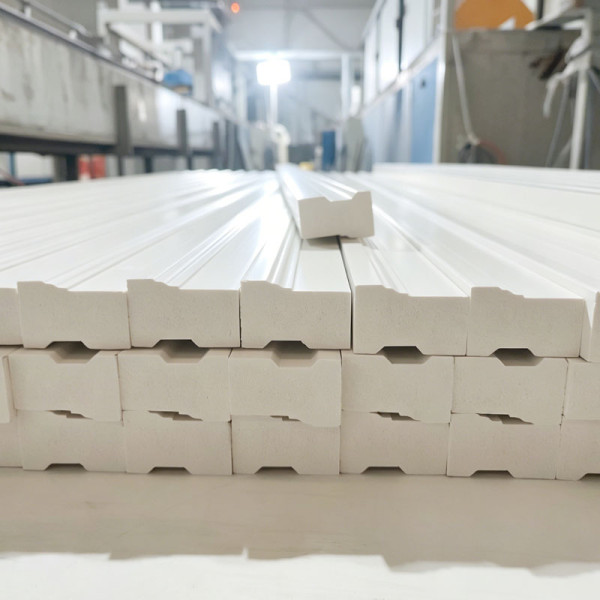
Boardway manufactures decorative cellular PVC Moulding for crown moulding, baseboard, door casing, and decorative trim projects.
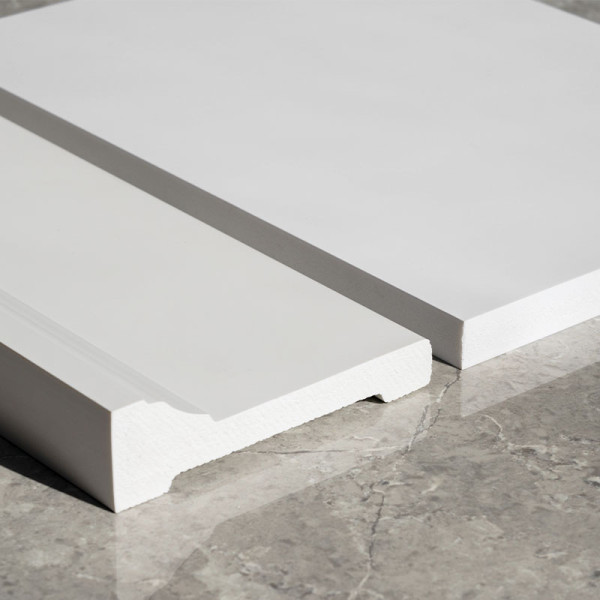
Complete PVC Trim Board & Moulding solutions for exterior and interior architectural applications with OEM customization support.
- Want to learn more about Cellular PVC Trim Boards? Visit our product main page.
- READ MORE