Screw Holding in PVC Foam Board: What Furniture Manufacturers Need to Know
- Share
- From
- www.boardwaybuilding.com
- publisher
- Boardway
- Issue Time
- Sep 10,2026
Summary
Learn what affects screw holding in PVC foam board, how to improve fastener performance, and what furniture manufacturers should test before production.

PVC foam board is widely used in furniture manufacturing for cabinet panels, shelving, furniture components, and other interior applications. Its lightweight structure, moisture resistance, and ease of fabrication make it an alternative to conventional wood-based panels in suitable applications.
However, when PVC foam board is assembled with screws, manufacturers need to consider more than whether a screw can be driven into the material. The reliability of a screw-fixed connection depends on the board structure, density, thickness, screw design, installation method, and loads applied during use.
For furniture manufacturers and cabinet makers, understanding these factors is essential when selecting PVC foam board for production. This guide explains what affects screw holding performance, how to improve fastening reliability, and what to evaluate before purchasing PVC foam board for furniture applications.
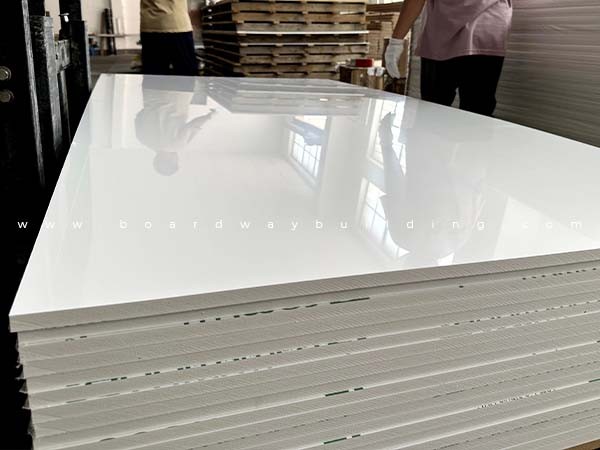
PVC Co-extruded Foam Board
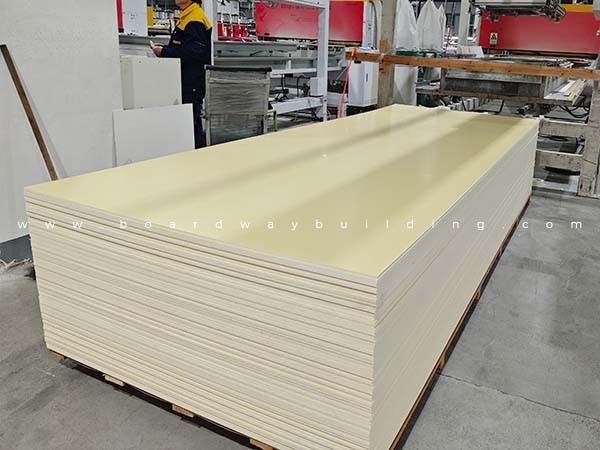
WPC Foam Board
1. What Affects Screw Holding in PVC Foam Board?
Screw holding performance refers to the ability of a board to retain a screw under the forces encountered during installation and use. Depending on the application, these forces may include direct pull-out, lateral loading, vibration, and repeated movement.
PVC foam board is a cellular plastic material rather than a solid piece of wood. Its internal structure and surface characteristics can therefore affect how a screw engages with the material.
Board Structure and Density
The structure and density of PVC foam board are important factors to consider when evaluating screw retention.
Different types of PVC foam board have different structural characteristics. Free foam board, Celuka board, and co-extruded PVC foam board may differ in their surface structure, internal cellular structure, and mechanical properties.
These differences can influence how the material supports a screw and resists deformation around the fastening point. Density is also relevant because it reflects, in part, the amount of material within a given volume. However, density alone cannot determine screw holding performance.
Manufacturers should evaluate the specific board grade rather than assume that all PVC foam boards perform identically. When screw-fixed connections are important to the finished product, testing the actual board and fastener combination provides a more reliable basis for selection.
Board Thickness and Screw Engagement Depth
Board thickness affects the space available for a screw to engage with the material. If the board is too thin for the intended fastening arrangement, the connection may not provide sufficient support for the application.
However, choosing a thicker board does not automatically guarantee a stronger connection. The result also depends on screw geometry, installation conditions, board structure, and the direction and magnitude of the applied load.
Furniture manufacturers should consider the thickness of the board together with the length and diameter of the screw, the required engagement depth, and the location of the fastening point.
The design should also account for the available material around the screw. A fastening arrangement that works in the middle of a panel may not perform the same way near an edge or corner.
Screw Type and Thread Design
Not all screws are equally suitable for every plastic material. Thread geometry, screw diameter, and the way the threads engage with the board can influence the stability of the connection.
The appropriate fastener depends on the board type, its thickness, the intended application, and the forces acting on the joint.
Rather than choosing screws based only on appearance or availability, furniture manufacturers should evaluate fasteners that are compatible with the specific PVC foam board grade. Where necessary, representative samples should be tested before the fastening method is adopted for mass production.
Installation Method and Fastener Position
Installation quality can affect screw holding performance just as much as material selection.
Over-tightening may damage the material surrounding the screw, while an unsuitable installation method may result in inconsistent fastening or localized deformation. Repeatedly removing and reinstalling screws can also affect the condition of the fastening point.
Fastener position is another important consideration. Screws placed too close to panel edges or corners may increase the risk of localized damage, depending on the board structure and joint design.
For production furniture, the installation method should be consistent and appropriate for the selected board and fastener combination. Where connections are critical to product performance, the complete assembly should be evaluated rather than relying on visual inspection alone.
2. Where Is Screw Holding Important in Furniture Manufacturing?
Screw holding requirements vary according to the function of each furniture component. A connection used to position a lightweight panel may have different requirements from one supporting a door, shelf, or frequently operated hardware component.
Cabinet Assembly
Cabinet construction may involve screws connecting side panels, top and bottom panels, partitions, and other structural components.
In these applications, the board must provide suitable support for the selected fastening arrangement. Manufacturers should consider the dimensions of the panels, the location of the joints, the expected loads, and whether the assembled cabinet will be moved or subjected to repeated handling.
PVC foam board can be considered for suitable cabinet constructions, but its suitability should be evaluated against the requirements of the specific design.
Hinge Installation
Hinges require particular attention because opening and closing a cabinet door introduces repeated movement and loading around the fastening points.
The suitability of PVC foam board for hinge installation depends on the board grade, hinge design, fastening arrangement, door dimensions, and frequency of use. A screw that can be installed successfully does not necessarily provide sufficient long-term support under repeated loading.
Manufacturers should test the complete door-and-hinge assembly under representative conditions. Depending on the design, alternative fastening arrangements or additional reinforcement may need to be considered.
Shelving Systems
Screw-fixed shelving applications require consideration of both the board itself and the overall support structure.
The loads carried by a shelf, its span, the position of the supports, and the way the shelf connects to the surrounding structure all affect the demands placed on the fastening points.
For shelves expected to carry substantial loads, the complete design should be evaluated rather than assuming that a particular board thickness or screw size is sufficient.
Furniture Hardware Installation
Handles, brackets, connectors, and other hardware may also be attached to PVC foam board using screws.
These components can introduce concentrated forces into relatively small areas. Their suitability depends on the type of hardware, the installation position, the expected load, and the material surrounding each fastening point.
For furniture produced in volume, testing representative assemblies can help manufacturers identify potential problems before they affect finished products.
3. How to Improve Screw Fixing Performance in PVC Foam Board
Reliable fastening begins with choosing the right material and designing the connection for its intended use. The following considerations can help furniture manufacturers reduce the risk of loose or damaged connections.
Choose a Board Grade Suitable for the Application
Start by identifying the function of the furniture component and the requirements of its connections.
A board used for a lightweight decorative panel may not need the same fastening performance as one used for a cabinet door or a hardware-bearing component.
Consider the board structure, density, thickness, and the expected loads. If screw retention is a critical requirement, request relevant technical information from the supplier and verify the material's suitability through testing.
The goal is not simply to select the densest or thickest board available, but to identify a board grade that meets the needs of the actual application.
Avoid Excessive Tightening
Applying excessive installation force can damage the material around a screw and compromise the connection.
Manufacturers should establish an appropriate installation procedure for the selected board and fastener combination. The procedure should produce consistent results without unnecessarily stressing the material.
For production environments, consistency is especially important. Changes in installation tools, settings, fasteners, or operator practices may affect the finished assembly and should be assessed when they could influence connection performance.
Consider Edge Distance and Fastener Layout
The position of each screw should be considered during the furniture design stage.
Insufficient material around a fastening point may increase the risk of localized damage. Likewise, concentrating too many fasteners in a small area may not provide the expected improvement in connection performance.
Panel geometry, edge distance, screw spacing, and the direction of the applied load should therefore be considered together.
Where the joint is highly loaded or space for fastening is limited, manufacturers should evaluate the proposed design through representative testing.
Test the Complete Assembly
Testing a screw in an isolated piece of board can provide useful information, but it does not fully represent the performance of a finished furniture component.
A complete assembly includes the board, fastener, hardware, joint geometry, and installation process. All these factors can influence the result.
Depending on the application, manufacturers may consider screw pull-out testing, joint load testing, or repeated-operation testing for components such as cabinet doors.
The selected test method should reflect the actual application and the failure modes that matter. Test conditions and results should be documented so that the chosen materials and assembly methods can be evaluated consistently.
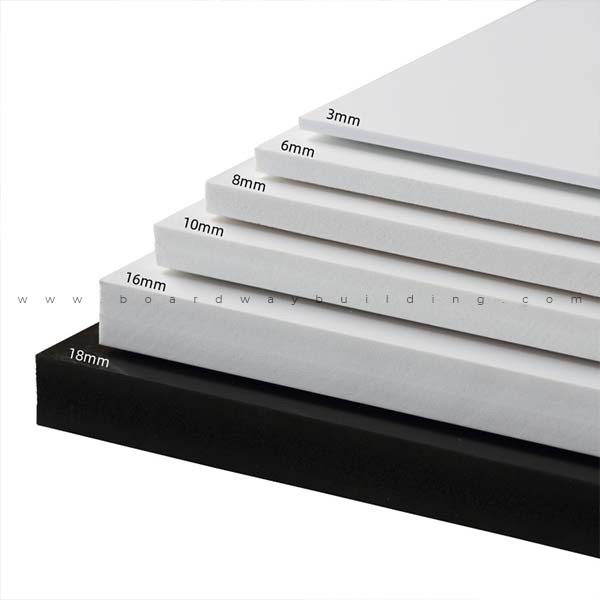
PVC Foam Board Thickness
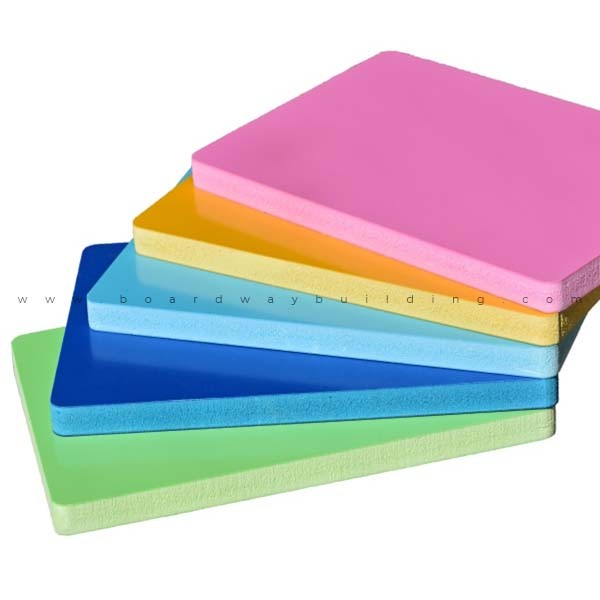
Colored PVC Foam Board
4. How Should Furniture Manufacturers Evaluate Screw Retention?
For furniture manufacturers purchasing PVC foam board in commercial quantities, screw holding should be considered during supplier evaluation and product qualification.
A structured evaluation can help determine whether a particular board grade is appropriate for the intended production process.
Request Relevant Technical Information
Ask the supplier for available technical data relating to the proposed board grade. Where screw retention or fastening performance has been tested, confirm the board specification, test method, test conditions, and the scope of the reported results.
A test result should not be treated as universally applicable to every board thickness, density, screw type, or furniture design.
If the supplier cannot provide data directly relevant to the intended application, arrange suitable sample testing before finalizing the specification.
Test Samples Before Mass Production
Sample evaluation allows manufacturers to examine how the board performs with their own screws, hardware, tools, and assembly procedures.
Whenever possible, use samples that match the intended production specification. A change in board structure, thickness, density, or fastener type may affect the results.
Testing under representative conditions is particularly important for applications involving hinges, load-bearing joints, or repeated assembly and disassembly.
Evaluate the Finished Assembly
A successful fastening test should be relevant to the finished product.
For example, a cabinet manufacturer may need to evaluate whether a hinge connection remains secure during repeated door operation, while a shelving manufacturer may need to assess the performance of the complete shelf support arrangement.
The acceptance criteria should reflect the intended use and any applicable product requirements. Where safety or significant loads are involved, the design and testing should be reviewed by appropriately qualified personnel.
Check Batch Consistency
For repeat orders, manufacturers should also consider consistency between production batches.
Relevant checks may include board thickness, density, dimensions, surface condition, and other properties specified for the product. If screw holding performance is critical, periodic verification using an established test procedure may also be appropriate.
Clear specifications and documented acceptance criteria help suppliers and buyers maintain consistent expectations throughout the purchasing relationship.

PVC Foam Board for Advertising

PVC Decorative Panel
5. Is PVC Foam Board Suitable for Screw-Fixed Furniture?
PVC foam board can be suitable for certain screw-fixed furniture applications, provided that the board grade, connection design, and fastening method meet the requirements of the finished product.
Its suitability should be evaluated according to the function of the component rather than assumed from the material name alone.
Applications Where PVC Foam Board May Be Considered
PVC foam board may be considered for cabinet panels, shelving, furniture components, and other applications where its lightweight structure, moisture resistance, and fabrication characteristics offer practical advantages.
For these uses, manufacturers should confirm that the selected board provides adequate support for the proposed connections and that the assembled product meets its performance requirements.
Applications Requiring Additional Design Consideration
More attention may be needed when a connection carries substantial loads, experiences repeated movement, or must withstand frequent removal and reinstallation.
Examples include cabinet hinges, heavily loaded joints, and components with limited space around fastening points.
In these situations, manufacturers may need to adjust the connection design, consider additional reinforcement, or evaluate alternative fastening methods. The appropriate solution depends on the application and should be verified through testing.
PVC foam board should therefore be selected as part of an overall furniture design, not as a direct substitute for every wood-based panel in every structural situation.
6. Choosing PVC Foam Board for Better Screw Retention
When sourcing PVC foam board for furniture manufacturing, buyers should communicate their application requirements clearly so that the supplier can recommend an appropriate product specification.
The following information is useful when requesting a quotation or technical consultation:
Boardway supplies PVC foam board products for a range of furniture and interior applications. Different product structures and specifications may be considered according to the intended use and manufacturing requirements.
For furniture manufacturers who prioritize screw retention, the most appropriate approach is to identify the required performance first, select a suitable board specification, and validate the complete fastening arrangement before mass production.
Looking for PVC foam board for cabinet or furniture manufacturing? Contact Boardway to discuss your application, required board specifications, and sample evaluation needs.
Frequently Asked Questions
1. Can You Screw Directly into PVC Foam Board?
Yes, screws can be installed directly into some PVC foam board products. However, the suitability and reliability of the connection depend on the board structure, thickness, screw design, installation method, and intended application. Testing the actual board and fastener combination is recommended when connection performance is important.
2. Does Higher-Density PVC Foam Board Have Better Screw Holding Strength?
Density can influence screw holding performance, but it is not the only determining factor. Board structure, surface characteristics, thickness, screw geometry, and installation conditions also matter. Manufacturers should evaluate the specific board grade rather than relying on density alone.
3. What Type of Screws Should Be Used for PVC Foam Board?
The appropriate screw depends on the board type, thickness, joint design, hardware, and expected loads. Thread design and engagement depth should be considered when selecting fasteners. Representative sample testing can help determine whether the proposed screw is suitable for the application.
4. Can PVC Foam Board Hold Cabinet Hinges?
PVC foam board may be suitable for certain hinge applications, but the result depends on the board grade, door dimensions, hinge design, fastening arrangement, and repeated operating loads. Manufacturers should test the complete door-and-hinge assembly before using the selected configuration in mass production.
5. How Can Screw Loosening in PVC Foam Board Furniture Be Prevented?
Potential measures include selecting a suitable board grade, using compatible fasteners, avoiding excessive tightening, designing appropriate edge distances, and maintaining consistent installation procedures. For joints subject to repeated movement or significant loads, assembly testing is important to verify long-term suitability.
6. How Do You Test Screw Retention in PVC Foam Board?
Depending on the application, testing may include screw pull-out tests, joint load tests, or repeated-operation tests for assembled components. The method should reflect the actual board specification, fastener, installation procedure, and expected use. Test conditions and acceptance criteria should be documented to support consistent evaluation.
- Want to learn more about PVC foam boards? Visit our PVC Foam Board main page.
- READ MORE