Laminated PVC Foam Board How to Select the Right Surface for Furniture and Interior Panels
- Share
- From
- www.boardwaybuilding.com
- publisher
- Boardway
- Issue Time
- Oct 12,2026
Summary
Learn how to select PVC film, PETG, HPL, aluminum and acrylic surfaces for laminated PVC foam board used in furniture and interior panels.

Laminated PVC foam board combines a lightweight PVC foam board substrate with a decorative or functional surface layer. It is used in furniture manufacturing, cabinet components, interior wall panels, display systems, and other applications where appearance, weight, and fabrication requirements need to be considered together.
However, choosing laminated PVC foam board involves more than selecting a color or pattern. The surface material, finish, substrate, bonding quality, and subsequent processing methods all influence the suitability of the finished panel for a particular application.
For furniture manufacturers, cabinet makers, interior panel producers, and material distributors, understanding these factors helps simplify product selection and reduce potential problems during production.
This guide explains the main surface options for laminated PVC foam board, how to match them to different applications, and what to consider when sourcing customized laminated panels from a manufacturer.
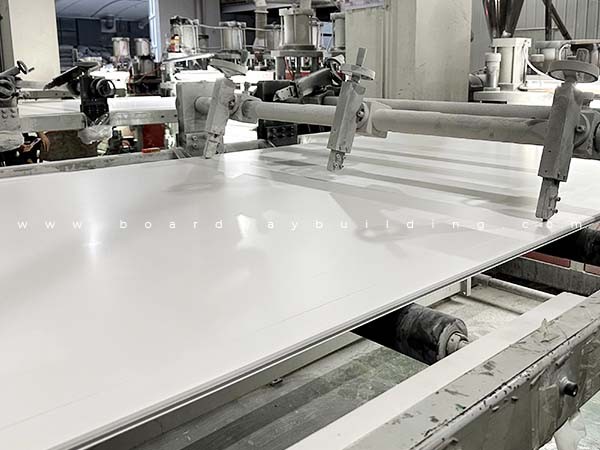
PVC Foam Board Production
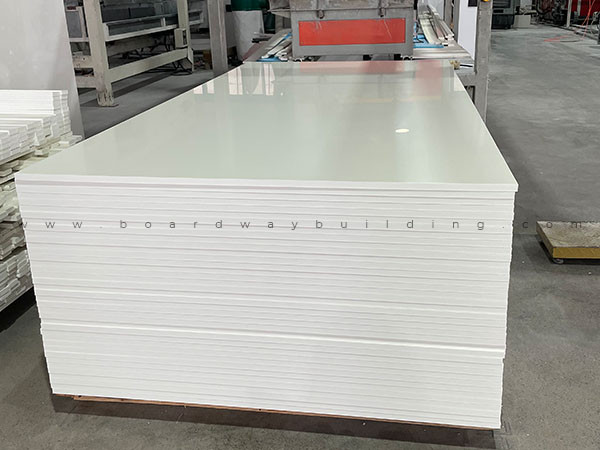
18mm PVC Foam Board
1. Why Surface Selection Matters for Laminated PVC Foam Board
The surface layer is one of the most visible parts of a laminated PVC foam board, but its role extends beyond appearance.
Different surface materials offer different decorative effects and performance characteristics. Some are selected primarily for their colors and patterns, while others are chosen for their surface hardness, wear resistance, or suitability for particular fabrication processes.
When selecting a surface, consider the following factors.
A suitable surface solution should meet the project's visual requirements while remaining compatible with the board's structure, fabrication process, and intended use.
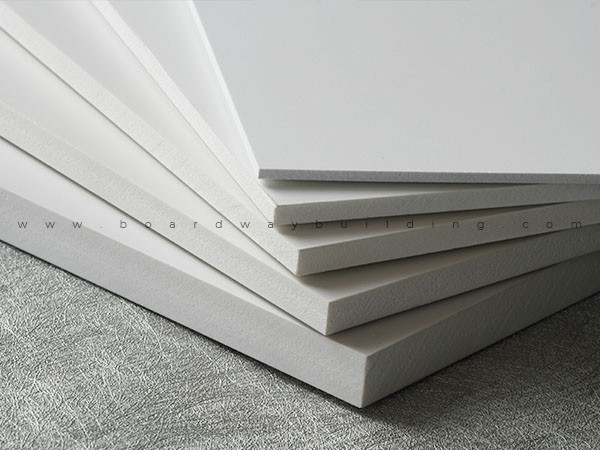
PVC Foam Board Different Thicknesses
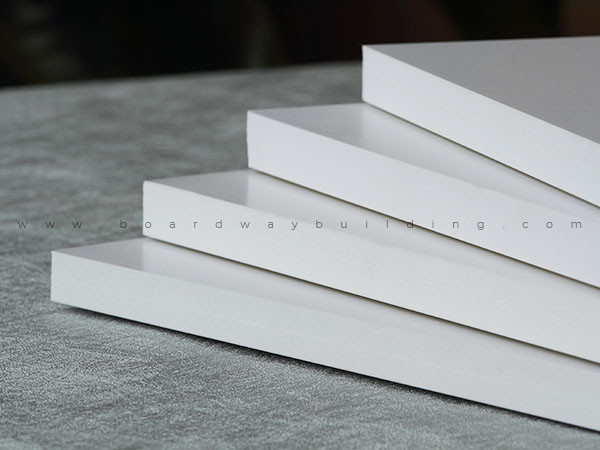
Lightweight Structure
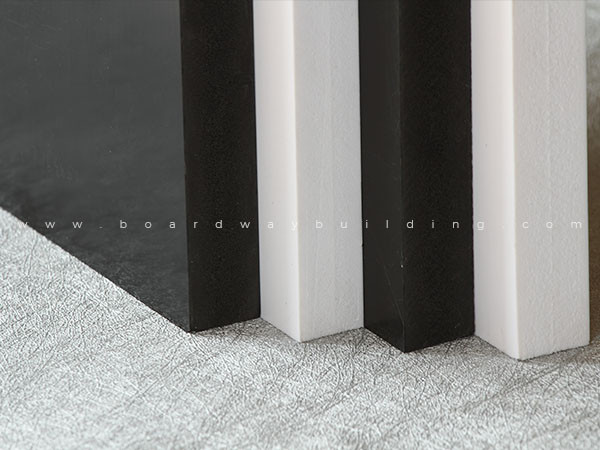
Smooth Surface
2. Common Surface Materials for Laminated PVC Foam Board
Laminated PVC foam board can be produced with different surface materials, depending on the manufacturer's capabilities and the requirements of the project. Common options include PVC film, PETG film, HPL, aluminum-based surfaces, and acrylic sheets.
Each option has its own characteristics, and the most appropriate choice depends on the specific material grade, construction, and application.
2.1 PVC Film
PVC film is a versatile decorative option for furniture panels and interior applications. It is available in a wide range of colors, wood grain patterns, and other decorative designs.
Its flexibility in appearance makes it suitable for projects that require coordinated colors or a consistent decorative style across multiple panels.
When selecting PVC film, consider:
PVC film is worth considering when decorative flexibility and coordinated panel appearance are important. However, its actual surface performance depends on the film formulation, thickness, and quality.
2.2 PETG Film
PETG film is another option for decorative panel surfaces. Depending on the grade and finish, it can provide a smooth appearance, attractive gloss, or a contemporary furniture finish.
For projects requiring a more refined surface appearance, PETG may be worth evaluating alongside PVC film and other decorative materials.
Before selecting PETG film, confirm its:
PETG film should not automatically be assumed to outperform every other surface material. Actual performance depends on the specific grade, thickness, surface treatment, and intended use.
2.3 HPL (High-Pressure Laminate)
High-pressure laminate is used in furniture and interior applications that require particular decorative or surface performance characteristics.
Depending on the grade, HPL can offer a range of decorative finishes and resistance to everyday wear. However, HPL is a distinct laminate product rather than simply another type of thin decorative film.
When considering HPL for laminated PVC foam board, manufacturers should evaluate its thickness, rigidity, bonding requirements, edge treatment, and compatibility with the substrate.
It is also important to verify any required technical properties against the specific HPL grade and relevant test documentation rather than assuming that all HPL products offer the same performance.
2.4 Aluminum Sheet or Aluminum Foil
Aluminum-based surfaces can provide a metallic appearance and may be suitable for applications requiring a distinctive decorative finish.
However, aluminum sheet and aluminum foil are not interchangeable terms. They can differ significantly in thickness, rigidity, handling requirements, and fabrication behavior.
When specifying an aluminum-faced panel, confirm the exact material construction, thickness, surface treatment, bonding method, and intended application.
The selected aluminum layer must also be compatible with the substrate and the subsequent processing requirements.
2.5 Acrylic Sheet
Acrylic sheet can provide a smooth, visually clear, or high-gloss decorative surface, depending on the product and finish.
It may be considered for furniture panels, decorative interior panels, and other applications where appearance is a major design consideration.
Important factors include:
Acrylic surfaces can be sensitive to scratching and processing conditions, depending on the grade. The selected material should therefore be evaluated against the requirements of the finished product.
3. How to Match the Surface Finish to Your Application
The best surface material depends on how the finished panel will be used. Rather than choosing a surface based only on appearance, consider the functional requirements of the complete product.
3.1 Furniture Panels and Cabinet Doors
Furniture panels and cabinet doors often require a consistent decorative appearance across multiple components.
PVC film, PETG film, HPL, and acrylic surfaces may all be considered, depending on the design, budget, and required surface performance.
For cabinet doors and visible furniture panels, pay attention to color consistency, gloss level, scratch resistance, cleaning requirements, and the appearance of exposed edges.
If the panels require CNC routing, grooves, drilled holes, or other decorative processing, confirm that the selected surface can accommodate those operations without unacceptable damage or edge defects.
3.2 Shelving and Storage Furniture
Shelves and storage furniture may experience repeated contact with objects, localized loading, and everyday wear.
Surface selection should therefore consider the expected contact conditions and cleaning requirements. A decorative finish alone does not determine the panel's load-bearing capacity or structural suitability.
The substrate's thickness, density, construction, support spacing, and connection design must also be evaluated according to the intended use.
For shelving and storage applications, both the surface and the underlying panel should be selected as part of the same product specification.
3.3 Interior Wall Panels and Decorative Panels
Interior wall panels are often selected for their decorative appearance, ease of maintenance, and compatibility with the overall interior design.
Wood grain, stone patterns, matte finishes, and other decorative surfaces can help create different visual effects.
When choosing laminated PVC foam board for wall panels, consider the installation method, joint design, cleaning requirements, and environmental conditions.
Where a project requires specific fire-performance, emissions, or other regulatory compliance, confirm that the complete panel construction has the necessary supporting test documentation.
3.4 Commercial Interiors and Display Applications
Commercial interiors, retail displays, and exhibition systems may require distinctive colors, consistent branding, and coordinated decorative surfaces.
For these applications, manufacturers should consider not only the appearance of an individual panel but also consistency across a larger production batch.
Confirm color references, pattern direction, surface finish, panel dimensions, packaging requirements, and approval procedures before bulk production.
If the finished panels must meet particular fire-safety or other performance standards, these requirements should be discussed with the supplier before selecting the surface material.
4. Choosing the Right Surface Appearance: Gloss, Matte, Texture, and Pattern
Surface material and surface finish are two different aspects of product selection.
PVC film, PETG film, HPL, aluminum, and acrylic describe material options or surface constructions. Glossy, matte, wood grain, and metallic describe visual finishes or decorative effects.
Understanding this distinction helps buyers communicate their requirements more accurately.
High-Gloss Finishes
High-gloss surfaces create a reflective appearance and can provide a clean, contemporary look for furniture and decorative panels.
When selecting a high-gloss finish, evaluate the uniformity of the surface and its resistance to scratches, fingerprints, and cleaning-related wear.
Matte Finishes
Matte surfaces produce less reflected light and are often selected for understated or contemporary interior designs.
The degree of matte appearance can vary, so it is useful to confirm the finish using physical samples rather than relying only on photographs.
Wood Grain Patterns
Wood grain finishes offer a timber-inspired appearance for furniture panels, cabinet components, and interior decoration.
When ordering multiple panels, confirm the pattern, color, and grain direction to maintain a coordinated appearance across the finished product.
Stone and Marble Patterns
Stone and marble patterns can create a decorative effect without requiring the panel itself to be made from natural stone.
The suitability of a particular finish depends on the available decorative material, the intended application, and the visual consistency required across panels.
Metallic Finishes
Metallic finishes can provide a distinctive appearance for contemporary furniture, commercial interiors, and display applications.
For metallic surfaces, confirm the actual surface material, finish, and bonding construction rather than assuming that every metallic appearance uses a real metal layer.
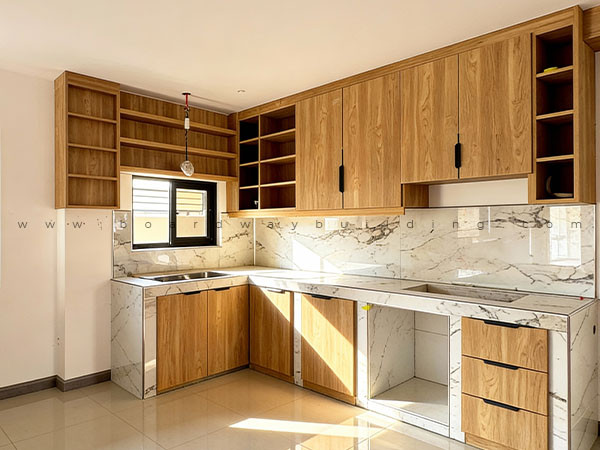
PVC Foam Board for Cabinet Doors
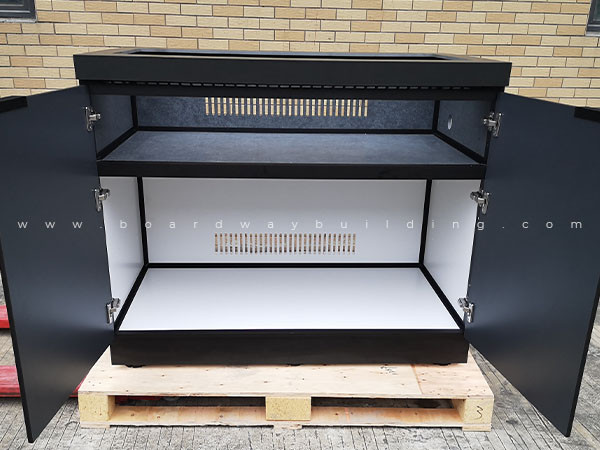
PVC Foam Board for Side Panels
5. Don't Overlook the Substrate and Lamination Quality
Even an attractive surface cannot compensate for an unsuitable substrate or poor lamination quality. The substrate and surface layer should be selected together to meet the requirements of the finished panel.
5.1 Choose the Right PVC or WPC Foam Board Substrate
PVC foam board and WPC foam board should be selected according to the intended application and the properties of the specific product.
Important considerations include:
Different formulations and board constructions can produce different results. Buyers should confirm the actual specifications of the offered material instead of assuming that all PVC or WPC foam boards have identical properties.
5.2 Check Surface Bonding and Lamination Quality
The bonding between the decorative surface and the substrate is an important part of the finished panel's quality.
During sample evaluation, check for visible bubbles, wrinkles, lifting, delamination, and other surface defects. Where appropriate, also evaluate the panel after the cutting and fabrication operations required by the project.
The suitability of the bonding system depends on the surface material, substrate, adhesive, and production process.
For bulk orders, agree on the applicable quality requirements and sample approval procedures before production begins.
5.3 Consider One-Sided or Two-Sided Lamination
Some applications require a decorative surface on only one side, while others may require both sides to be laminated.
The choice depends on the visible faces, product design, fabrication requirements, and intended use of the panel.
For two-sided lamination, specify the surface material and finish for each side. They may be identical or different, depending on the project.
The back surface should not be overlooked simply because it is less visible. Its construction may affect appearance, fabrication, and the requirements of the finished product.
5.4 Confirm Compatibility with Further Processing
Laminated PVC foam board may require additional processing before it becomes a finished furniture component or interior panel.
Common operations include cutting, CNC routing, drilling, grooving, edge finishing, and other customized fabrication.
Before ordering, confirm whether the selected surface material can withstand the required operations. Some decorative surfaces may need specific handling or processing conditions to prevent chipping, scratching, peeling, or edge damage.
Edge finishing is another important consideration. For furniture panels and other applications with exposed edges, the edge treatment should complement the selected surface in both appearance and function.
Depending on the project, Boardway can provide customized edge banding designed to match the selected surface material, helping create a more coordinated appearance between the panel face and its edges. Boardway also offers edge banding services for projects that require additional processing.
When discussing edge banding requirements, buyers should confirm the desired color, pattern, material, dimensions, edge construction, and compatibility with the finished panel. If matching edge banding is required, it is best to specify this together with the surface material at the beginning of the project.
For panels that require several secondary operations, confirm the complete processing scope before production. Coordinating the surface material, edge banding, and edge finishing requirements in advance can help reduce mismatches and simplify downstream manufacturing.
6. A Buyer's Checklist for Ordering Laminated PVC Foam Board
Providing complete specifications helps manufacturers evaluate the project and recommend a suitable laminated panel construction.
Before requesting a quotation, prepare the following information where available.
Not every project requires every detail at the quotation stage. However, providing drawings, photographs, reference samples, or a finished-product specification can help clarify the requirements.
If you are unsure which surface material or substrate is suitable, discuss the intended application and processing requirements with the manufacturer before finalizing the specification.
7. Why Work with Boardway for Laminated PVC Foam Board?
Boardway specializes in PVC foam board products for furniture, construction, and interior applications. Our product offering includes different board types, thicknesses, densities, surface options, and customized lamination solutions.
For projects requiring laminated PVC foam board, we can work with buyers to clarify substrate specifications, decorative surface requirements, and secondary processing needs.
Depending on the project and confirmed production capabilities, these requirements may include:
By discussing the substrate, surface material, and edge treatment together, buyers can establish a more complete specification before moving into sample evaluation and bulk production.
If you are sourcing laminated PVC foam board for furniture or interior panels, contact Boardway with your application, preferred surface finish, board dimensions, and processing requirements. Our team can help you evaluate the available options and discuss a suitable customized solution.
8. Frequently Asked Questions
What surface materials are available for laminated PVC foam board?
Depending on the manufacturer's product range, options may include PVC film, PETG film, HPL, aluminum-based surfaces, and acrylic sheets. Availability depends on the required construction, specifications, and application. Confirm the exact material options with your supplier before ordering.
Which surface finish is suitable for furniture and cabinet panels?
The right finish depends on the design and performance requirements. Wood grain and matte finishes may suit certain furniture styles, while high-gloss or other decorative finishes may be preferred for different designs. Consider cleaning, scratch resistance, fabrication, and the intended use of the panel when making a selection.
What is the difference between PVC film, PETG film, and HPL?
They are different surface materials with different constructions and characteristics. PVC and PETG films are generally used as decorative surface layers, while HPL is a distinct laminate product. Their suitability depends on the material grade, thickness, bonding system, and intended application.
Can laminated PVC foam board be customized with wood grain or other patterns?
Customization may be available depending on the surface materials and patterns offered for the selected board construction. Buyers should provide color references, photographs, or physical samples where possible and confirm pattern availability before production.
Can laminated PVC foam board be cut or CNC machined after lamination?
Many laminated panels can undergo secondary processing, but the appropriate method depends on the substrate, surface material, and required operation. Cutting, routing, drilling, and edge finishing should be evaluated to avoid damaging the decorative layer. Confirm the processing requirements with the supplier before ordering.
Can Boardway provide matching edge banding and edge banding services?
Yes. Boardway can provide customized edge banding designed to match the selected surface material and offers edge banding services for relevant projects. Buyers should confirm the required color, pattern, dimensions, edge construction, and processing scope when requesting a quotation.
Conclusion
Selecting laminated PVC foam board involves more than choosing an attractive surface. The surface material, decorative finish, substrate, bonding quality, and secondary processing requirements all need to work together.
For furniture manufacturers and interior panel producers, a clear specification helps ensure that the selected panel meets the project's appearance and fabrication requirements. Where exposed edges are part of the finished design, matching edge banding and professional edge banding services should also be considered during the initial planning stage.
Looking for laminated PVC foam board for furniture or interior panels? Contact Boardway to discuss your substrate, surface finish, matching edge banding, and customization requirements.
- Want to learn more about PVC foam boards? Visit our PVC Foam Board main page.
- READ MORE