PVC Trim Board Specifications Explained: Dimensions, Profiles and Custom Orders
- Share
- From
- www.boardwaybuilding.com
- publisher
- Boardway
- Issue Time
- Oct 24,2026
Summary
Explore PVC trim board dimensions, profile types and custom order requirements. Learn what specifications to prepare when sourcing PVC trim from Boardway.

When sourcing PVC trim boards for construction and building material projects, choosing the right product involves more than selecting a width or thickness. Profile shape, overall dimensions, surface finish, dimensional tolerances, and order requirements all affect how a product fits its intended application.
For importers, distributors, building material wholesalers, and construction product manufacturers, understanding these specifications helps simplify supplier communication and reduce the risk of ordering unsuitable profiles.
Boardway supplies PVC trim boards and moulding profiles in a range of sizes and designs, with options for custom requirements. This guide explains the key specifications to consider when purchasing PVC trim boards, how to match profiles to different applications, and what information to prepare when requesting a quotation.
1. What Specifications Should You Check When Buying PVC Trim Boards?
A clear specification helps both buyers and manufacturers confirm that the requested product meets the project's requirements. Before placing an order, consider the following dimensions and product characteristics.
1.1 Board Width and Thickness
Width and thickness are two of the most important PVC trim board dimensions.
Width determines the area covered by the trim and influences its visual proportions. For example, a wider trim board may be suitable for applications requiring broader coverage, while a narrower profile may be preferred for smaller decorative details.
Thickness affects the profile's overall dimensions and may influence its rigidity, weight, installation details, and compatibility with adjacent components. The appropriate thickness depends on the intended application and the product's specific design.
When comparing supplier quotations, confirm whether the listed dimensions refer to nominal or actual measurements. For moulding profiles, also distinguish between the overall width, projection, and other cross-sectional dimensions.
1.2 Length and Dimensional Tolerances
PVC trim products may be supplied in standard lengths or produced to specified dimensions, depending on the product range and manufacturing requirements.
Length is particularly important for distributors managing inventory and contractors planning installation. Consistent dimensions can help simplify cutting, handling, and project scheduling.
Buyers should also confirm the applicable dimensional tolerances. These define the acceptable variation between the specified dimensions and the finished product.
Rather than assuming that every supplier follows the same tolerance standard, request the manufacturer's specifications or agree on the required tolerances before production.
1.3 Profile Shape and Cross-Section
PVC trim boards and PVC moulding profiles can have different cross-sectional designs depending on their intended applications.
Flat trim boards generally have a simple rectangular cross-section. Moulding profiles, by comparison, may include stepped edges, rounded sections, grooves, or other decorative contours.
These differences affect the product's appearance, coverage, and compatibility with surrounding building components.
When requesting a quotation for a particular profile, provide a cross-sectional drawing, reference photograph, or physical sample whenever possible. A product name alone may not communicate all the dimensions and details needed for accurate manufacturing.
2. Common PVC Trim Board Dimensions and Profile Types
PVC trim products are available in different dimensions and profile designs. Understanding the available options helps buyers narrow their choices before discussing detailed requirements with a manufacturer.
2.1 Common PVC Trim Board Widths and Thicknesses
Boardway's PVC trim product range includes the following width and thickness options.
| Specification | Available options |
| Width | 64, 89, 114, 140, 185, 235, 286, and 394 mm |
| Thickness | 9.5, 13, 16, 19, 25.4, 32, and 38 mm |
| Profile selection | More than 80 profile designs |
These figures represent the available ranges within Boardway's product portfolio. Not every profile is necessarily available in every listed width and thickness combination. Buyers should confirm the dimensions available for their selected profile.
The required dimensions should be determined by the application, the design of the surrounding components, and the project's specifications. If a standard option does not meet these requirements, a custom profile or dimensional adjustment may be worth discussing with the manufacturer.
2.2 Flat Trim Boards and Decorative Moulding Profiles
PVC trim boards and moulding profiles serve different purposes within construction and finishing projects.
Flat trim boards are generally used where a straightforward, flat-faced trim element is required. Their simple geometry can make them suitable for a range of finishing and covering applications.
Decorative moulding profiles have shaped cross-sections designed to create particular visual effects or accommodate specific installation details. Depending on the design, they may be used around openings, along wall edges, or as part of exterior decorative assemblies.
When selecting a profile, consider more than its front-facing appearance. The rear surface, edge geometry, projection, and dimensions of adjoining surfaces may also affect how the product fits the installation.
2.3 How Profile Design Affects Application
The right profile depends on where the trim will be installed and what function it needs to perform.
For example, a profile used around a window opening may need to cover the joint between the frame and the surrounding wall. A corner board may require dimensions that provide suitable coverage across an exterior corner. Decorative mouldings may need a particular contour to match an existing architectural design.
These requirements should be communicated before production rather than left to interpretation based on a product name.
For replacement projects, providing the dimensions of the existing trim can help the manufacturer assess whether a standard profile is suitable. For new projects, drawings and installation details can help establish the required profile geometry.

3. How to Choose the Right PVC Trim Profile for Your Application
Selecting a PVC trim profile starts with identifying its installation location, coverage requirements, and relationship to other building components.
3.1 Window and Door Trim
Window and door trim is commonly used to finish the edges around openings and create a consistent appearance.
When specifying these products, consider the width required to cover the surrounding joint, the thickness or projection of the profile, and the dimensions of the frame or adjacent wall.
For replacement projects, the existing trim can serve as a reference. For new construction, the profile should be selected in coordination with the opening dimensions and the intended installation method.
Buyers supplying window and door manufacturers or building material distributors should also consider whether the selected profile needs to match an established product design.
3.2 Corner Boards and Exterior Wall Trim
Corner boards and exterior wall trim are used to finish building corners and selected exterior edges.
Their dimensions should provide the required coverage while fitting the surrounding cladding or wall assembly. Profile geometry, installation details, and the dimensions of adjacent materials all need to be considered.
For projects involving multiple buildings or repeated installations, consistent profile specifications can simplify procurement and help maintain a uniform finished appearance.
Where the trim forms part of an exterior system, confirm that the product and installation method are suitable for the intended exposure conditions.
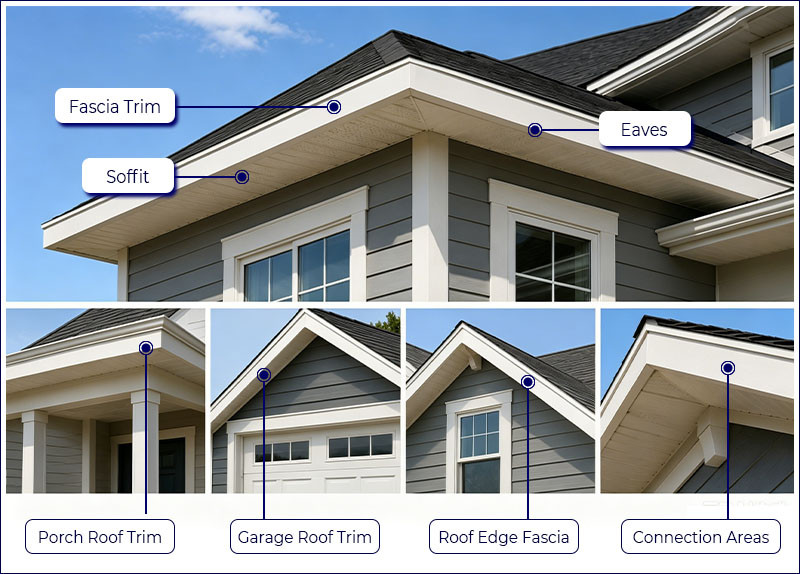
3.3 Fascia, Decorative Mouldings, and Other Trim Applications
PVC trim products can also be specified for fascia, decorative mouldings, and other finishing applications, depending on the available profile designs and product requirements.
For fascia and similar applications, buyers should confirm the required dimensions, installation arrangement, and compatibility with adjacent building materials.
Decorative mouldings may require closer attention to cross-sectional details because small differences in contour or projection can affect the finished appearance.
For projects with specialized requirements, supplying a drawing or sample is often more reliable than selecting a profile based only on a general description.

45-degree miter saw
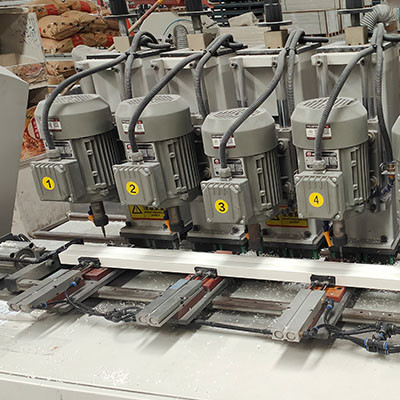
Drilling machine
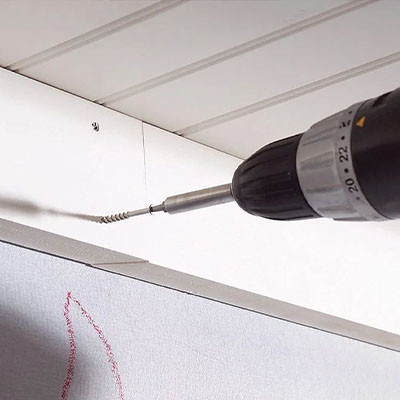
Screw fastening
4. Standard PVC Trim Profiles vs. Custom PVC Trim Boards
When sourcing PVC trim boards, buyers generally need to decide whether an existing profile will meet their requirements or whether a custom solution is necessary.
4.1 When Standard Profiles Are the Better Choice
Standard profiles can be suitable for recurring applications, established product lines, and projects that use commonly available dimensions.
They may also simplify supplier evaluation because buyers can compare defined product specifications before placing an order.
If a standard profile meets the required dimensions and application needs, there may be no reason to develop a new design. Buyers should still confirm the available dimensions, surface options, order quantity, and production schedule for the specific product.
4.2 When to Request a Custom Profile
A custom PVC trim profile may be appropriate when an existing product does not match the required cross-section, dimensions, or design.
Custom development can be relevant for OEM projects, replacement profiles, proprietary building products, and applications requiring specific dimensional details.
However, customization does not automatically mean that every design can be manufactured without additional development. Feasibility depends on the profile geometry, material requirements, manufacturing process, and other technical considerations.
Before proceeding, discuss the proposed design with the manufacturer to determine whether modifications, tooling, samples, or other production preparations are required.
4.3 What Information Is Needed for a Custom Order?
Providing complete specifications at the quotation stage helps reduce misunderstandings and makes technical evaluation more efficient.
When requesting a custom PVC trim profile, prepare the following information where available:
If you do not have a complete technical drawing, you can begin with an application description, reference images, and the dimensions you already know. The remaining details can then be clarified during technical discussions with the manufacturer.
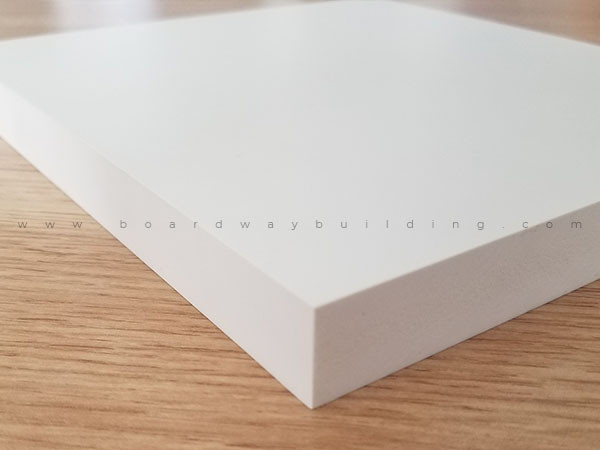
Cellular PVC Fascia Board
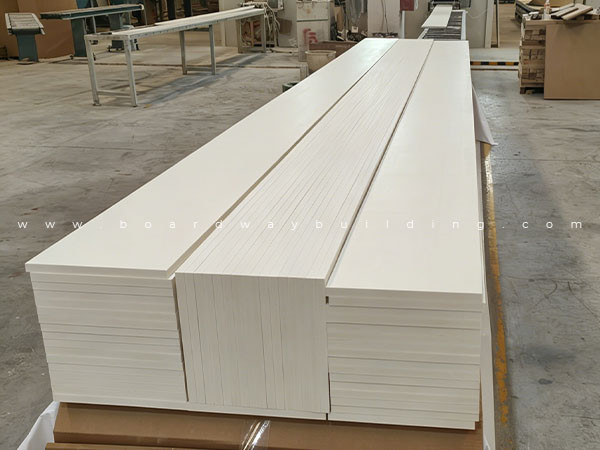
PVC Fascia Board Manufacturer
5. What Affects PVC Trim Board Pricing and Lead Time?
PVC trim board pricing depends on the product specifications and order requirements. Comparing quotations is more meaningful when the products being compared have equivalent dimensions, profiles, surface requirements, and quality expectations.
5.1 Dimensions, Profile Complexity, and Material Requirements
Product dimensions affect the amount of material required, while profile geometry can influence manufacturing complexity.
A simple flat profile and a more intricate moulding profile may involve different production considerations. Special dimensional requirements, surface treatments, and other technical specifications can also affect the quotation.
When requesting prices from multiple suppliers, provide the same drawing and specification sheet to each supplier. This makes it easier to compare quotations on a consistent basis.
5.2 Order Quantity and Production Setup
Order quantity can influence production planning and unit pricing.
Standard profiles and custom profiles may also have different production preparation requirements. Depending on the design, a custom order may involve tooling development, sample evaluation, or other setup work.
Ask the manufacturer to clarify any applicable tooling charges, minimum order quantities, sample costs, and production requirements before confirming the order.
For repeat purchases, it is also useful to establish a clear specification that can be referenced in subsequent orders.
5.3 Packaging, Shipping, and Order Planning
Packaging and shipping requirements should be considered alongside the product price.
PVC trim products may have relatively long dimensions, so packaging design, bundle quantities, container loading, and protection during transportation can influence the overall landed cost.
Buyers should communicate the destination, required packaging, estimated order volume, and preferred delivery schedule when requesting a quotation.
A complete quotation should clarify which specifications, packaging arrangements, and delivery terms are included, allowing buyers to evaluate the overall purchasing cost rather than comparing unit prices alone.
6. Why Work with Boardway for PVC Trim Boards and Custom Profiles?
Boardway offers a range of PVC trim boards and moulding profiles for building material distributors, importers, wholesalers, and other B2B customers.
With more than 80 profile designs and a range of width and thickness options, Boardway can support buyers looking for established product designs as well as customers who need to discuss specific dimensional requirements.
When evaluating a potential order, the team can review the requested profile, dimensions, application, and order requirements to determine suitable manufacturing options.
For buyers developing their own product lines, drawings, reference samples, and clear dimensional specifications provide a practical starting point for discussing custom profile requirements.
If you are sourcing PVC trim boards for distribution or a construction project, preparing these details before requesting a quotation can make the process more efficient and help both parties confirm the product requirements.
7. Frequently Asked Questions
What are the standard dimensions of PVC trim boards?
PVC trim board dimensions vary by product type and manufacturer. Boardway offers a range of width and thickness options, but the available combinations depend on the selected profile. Confirm the exact dimensions with the supplier before ordering.
What is the difference between a PVC trim board and a PVC moulding profile?
A PVC trim board generally refers to a flat or simply shaped trim product, while a PVC moulding profile has a more specifically designed cross-section. The appropriate choice depends on the required appearance, coverage, and installation details.
Can PVC trim boards be manufactured to custom dimensions?
Custom dimensions may be possible depending on the product design, manufacturing capabilities, and order requirements. Buyers should provide the requested dimensions and application details so the manufacturer can assess feasibility.
Can I order PVC trim profiles based on a drawing or sample?
A drawing or physical sample can help communicate the required profile geometry. A dimensioned cross-sectional drawing is particularly useful. The manufacturer can review the information and confirm whether the design can be produced.
What information should I provide when requesting a PVC trim board quotation?
Provide the profile or drawing, dimensions, required quantity, surface and color requirements, application, packaging preferences, and destination market. If some details are not yet available, explain the intended use and provide reference images to begin the discussion.
What affects the minimum order quantity for custom PVC trim profiles?
The minimum order quantity may depend on the profile design, production setup, tooling requirements, material specifications, and manufacturing arrangements. Contact the manufacturer with your proposed design and estimated quantity to confirm the requirements for your project.
Request PVC Trim Board Specifications or a Custom Quote
Looking for PVC trim boards in standard sizes or custom profiles?
Contact Boardway with your drawings, dimensions, estimated order quantity, and application requirements. Our team can review your specifications and discuss suitable manufacturing options for your project.
Whether you are sourcing established profiles for distribution or developing a custom trim product, providing clear specifications is the first step toward an efficient quotation and production process.
Related Products
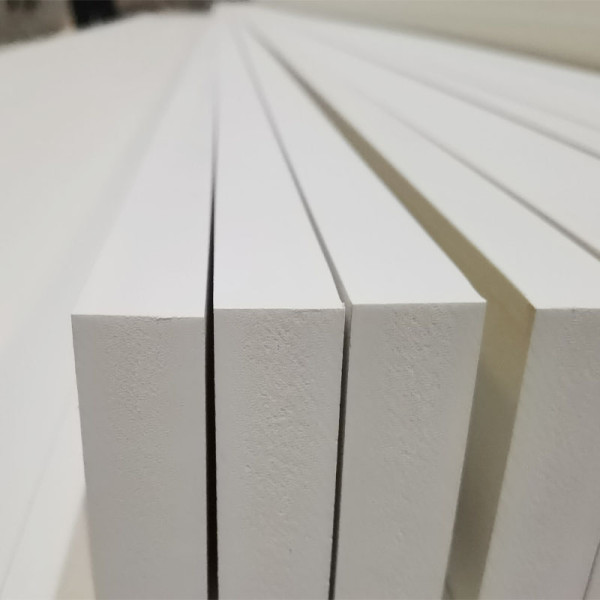
Durable cellular PVC Fascia Board for exterior roofline applications. Moisture resistant, low maintenance, OEM sizes available.
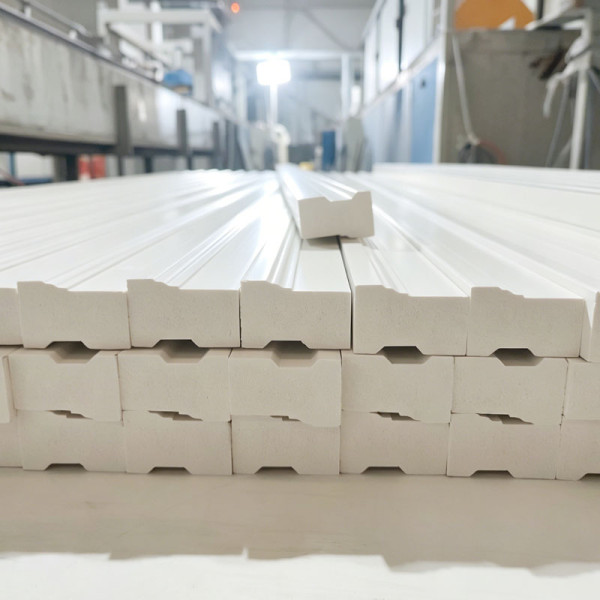
Boardway manufactures decorative cellular PVC Moulding for crown moulding, baseboard, door casing, and decorative trim projects.
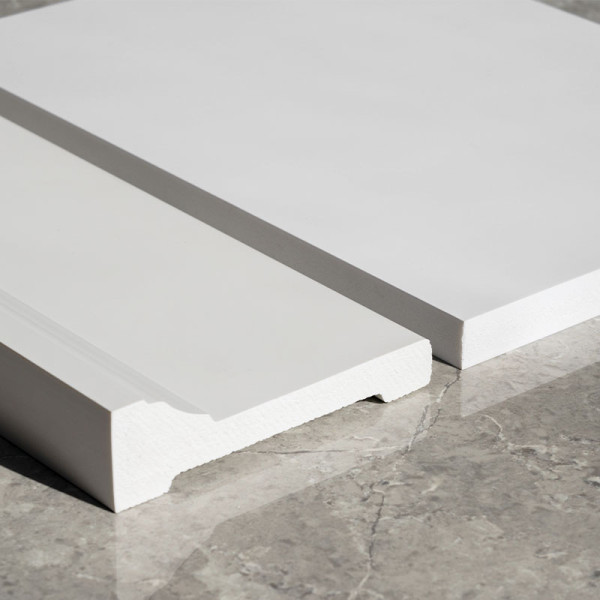
Complete PVC Trim Board & Moulding solutions for exterior and interior architectural applications with OEM customization support.
- Want to learn more about Cellular PVC Trim Boards? Visit our product main page.
- READ MORE