PVC Foam Board Density Explained: How to Choose the Right Density for Your Application
- Share
- From
- www.boardwaybuilding.com
- publisher
- Boardway
- Issue Time
- Dec 23,2026
Summary
Learn how PVC foam board density affects weight, rigidity and machining performance. Discover how to choose the right density for different applications.
When purchasing PVC foam board, density is one of the most important specifications to consider. It affects the board's weight, material consumption, and overall structural characteristics. However, choosing the right density is not simply a matter of selecting the highest or lowest available value.
Different applications have different requirements. A furniture manufacturer may prioritize rigidity and screw-holding performance, while an advertising fabricator may focus more on weight, cutting, and engraving. The right choice depends on how the board will be processed and used in the finished product.
In this guide, we explain what PVC foam board density means, how it relates to other material properties, and how to select a suitable density for different applications.
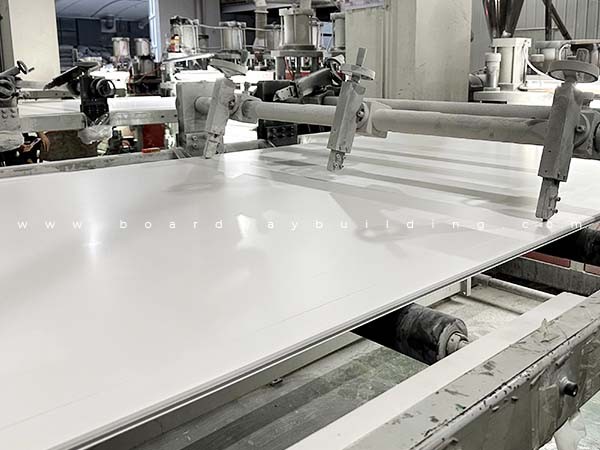
PVC Foam Board Production
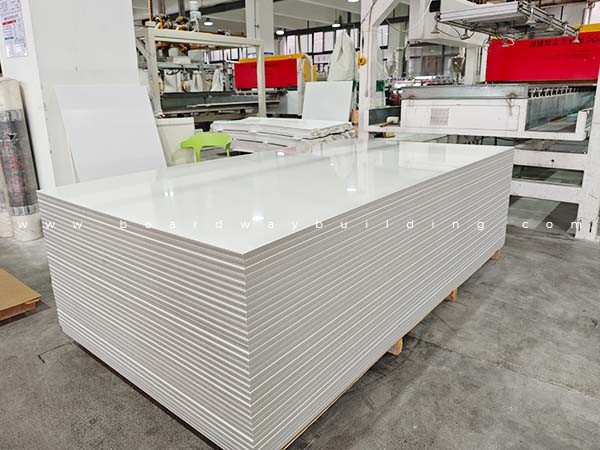
PVC Co-extruded Foam Board
1. What Is PVC Foam Board Density?
1.1 Definition of PVC Foam Board Density
Density refers to the mass of a material per unit of volume. For PVC foam board, it is commonly expressed in grams per cubic centimeter (g/cm³).
For example, a PVC foam board with a density of 0.6 g/cm³ has a mass of approximately 0.6 grams per cubic centimeter of volume.
PVC foam boards are manufactured with different densities to meet different application and processing requirements. Depending on the formulation and production process, manufacturers can adjust the board's density to achieve different combinations of weight and structural characteristics.
When comparing PVC foam boards, it is important to check the density together with other specifications, such as thickness, dimensions, and board structure.
1.2 How Is PVC Foam Board Density Calculated?
Density is calculated by dividing the mass of a material by its volume.
Density = Weight ÷ Volume
For a rectangular PVC foam board, its volume can be calculated using:
Volume = Length × Width × Thickness
For example, consider a PVC foam board measuring 1220 × 2440 × 10 mm with a density of 0.6 g/cm³.
Its approximate theoretical weight can be calculated as follows:
Volume = 122 × 244 × 1 = 29,768 cm³
Weight = 29,768 × 0.6 = 17,860.8 g
Therefore, the theoretical weight of this board is approximately 17.86 kg.
This calculation provides an estimate based on nominal dimensions and density. Actual board weight may vary due to manufacturing tolerances and measurement conditions.

PVC Foam Board for Bookshelf

PVC Foam Board Cabinet
2. How Does Density Affect PVC Foam Board Properties?
Density is an important material specification, but it should not be used as the only indicator of board performance. Its influence needs to be considered alongside thickness, formulation, foam structure, and manufacturing quality.
2.1 Weight
One of the most direct effects of density is its relationship with weight.
For boards with the same dimensions and thickness, a higher-density board generally weighs more than a lower-density board.
This is particularly relevant for applications where product weight matters, such as furniture, advertising displays, interior panels, and lightweight fabricated products.
For manufacturers purchasing PVC foam boards in bulk, density also affects material consumption and transportation weight.
2.2 Rigidity and Structural Performance
Density can influence the structural characteristics of PVC foam board. However, a higher density does not automatically mean that a board will perform better in every structural application.
Rigidity and other mechanical properties are also affected by:
For example, increasing board thickness may improve resistance to bending, but the actual result depends on the material structure and application conditions.
When a project has specific load-bearing or structural requirements, buyers should evaluate the relevant mechanical properties rather than relying on density alone.
2.3 Surface and Machining Performance
PVC foam boards are commonly processed through cutting, drilling, routing, sanding, and CNC machining.
Different density levels may produce different machining characteristics. However, the final processing result also depends on the board's formulation, surface structure, machining equipment, cutting tools, and processing parameters.
For manufacturers producing furniture components, advertising products, or decorative panels, it is important to evaluate whether the selected board can meet the requirements of their actual fabrication process.
Testing samples before bulk purchasing is a practical way to confirm machining suitability.
2.4 Material Consumption and Cost
Density also influences material consumption.
For boards with identical dimensions, a higher-density board generally contains more material by weight. This may affect the material cost per sheet, as well as transportation and handling expenses.
However, choosing the lowest-density option is not always the most economical solution.
If a board does not meet the requirements of the finished product, additional reinforcement, processing adjustments, or product redesign may be necessary.
A better purchasing decision considers the total material cost in relation to the required application performance.
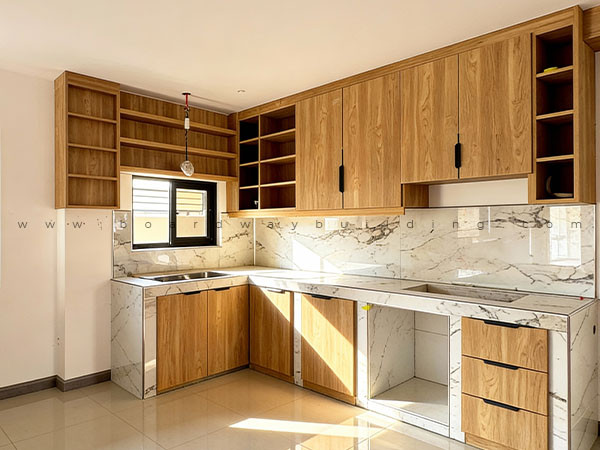
PVC Foam Board for Cabinet Doors
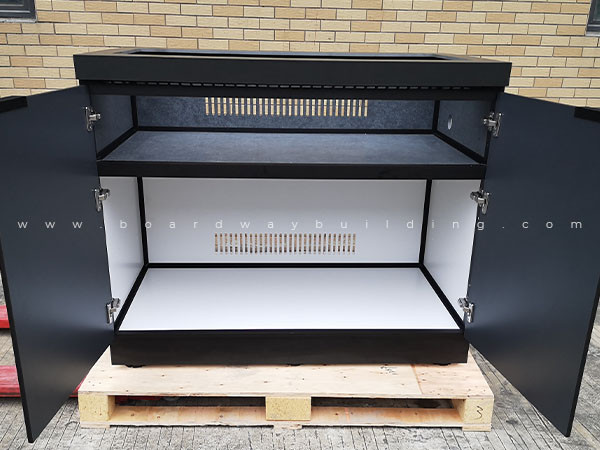
PVC Foam Board for Side Panels
3. Low, Medium, and High Density PVC Foam Board: What's the Difference?
PVC foam boards are available in different density ranges. For general selection purposes, buyers may classify them as low-density, medium-density, and high-density boards.
These terms are descriptive rather than universal industry classifications. Exact density ranges can vary between manufacturers and product types.
| Density Category | General Characteristics | Typical Selection Considerations |
| Low Density | Lower weight and material consumption per unit volume | Weight-sensitive applications |
| Medium Density | A balance of weight and structural characteristics | General furniture and decorative fabrication |
| High Density | Higher weight and different structural characteristics | Applications requiring specific material or machining properties |
The most suitable density depends on the intended product.
For example, a lightweight display component may not require the same material specifications as a furniture panel used in a cabinet structure.
Rather than selecting a density category based only on its name, buyers should confirm the actual density value and evaluate the board against their application requirements.
4. How to Choose the Right PVC Foam Board Density for Different Applications
Different industries use PVC foam board in different ways. Understanding the requirements of each application can help manufacturers and buyers select more appropriate material specifications.
4.1 PVC Foam Board for Furniture and Cabinet Manufacturing
PVC foam board is used in furniture manufacturing for cabinet components, wardrobe panels, shelving, furniture parts, and other fabricated products.
For these applications, buyers should consider several factors:
Density is one factor in this selection process, but it should be evaluated together with board thickness and mechanical performance.
For example, a cabinet manufacturer producing furniture panels may require a different combination of density and thickness from a manufacturer producing lightweight decorative components.
Co-extruded PVC foam board is another option worth considering for furniture applications. Its harder outer skin and foam core provide a different surface and structural configuration from conventional PVC foam board.
The appropriate product should be selected according to the intended furniture design and processing requirements.
4.2 PVC Foam Board for Advertising and Signage
PVC foam board is widely used in advertising and signage fabrication, including display boards, exhibition panels, promotional signs, and dimensional lettering.
In this industry, weight and machinability are important considerations.
A suitable density should be selected based on:
For example, a small indoor display panel and a large-format advertising structure may have different material requirements.
Fabricators should also consider whether the board surface is suitable for their printing, painting, laminating, or other finishing processes.
4.3 PVC Foam Board for Interior Decoration
PVC foam board is also used in interior decoration, including decorative panels, furniture surfaces, wall-related components, and other interior fabrication projects.
For these applications, density should be considered alongside thickness, appearance, and installation requirements.
Surface finish is particularly important when the board will be visible in the finished product.
Depending on the product type, buyers may consider:
For projects requiring decorative appearances, laminated PVC foam board offers additional surface options, including wood-grain, solid-color, leather-texture, and marble-inspired finishes.
The selected density should meet the requirements of the finished panel without overlooking its visual and fabrication needs.
4.4 PVC Foam Board for General Fabrication
PVC foam board is suitable for various fabrication processes, including:
Different fabrication projects may require different material characteristics.
For example, a product involving detailed CNC machining may have different requirements from a simple cut-to-size panel.
When choosing density, manufacturers should consider the complexity of the processing, the final product dimensions, and the required surface quality.
If the application involves specific machining requirements, testing a representative sample under actual production conditions is recommended.
5. Density vs. Thickness: Two Factors You Should Consider Together
Density and thickness are two important specifications that directly influence the weight of PVC foam board.
However, they are not interchangeable.
For boards with the same length and width:
The theoretical weight of a rectangular PVC foam board can be calculated using:
Weight (kg) = Length (cm) × Width (cm) × Thickness (cm) × Density (g/cm³) ÷ 1000
For example, two PVC foam boards with the same dimensions but different densities will have different theoretical weights.
Likewise, two boards with the same density but different thicknesses will also have different weights.
It is important to evaluate both specifications when selecting material for furniture, advertising, and interior applications.
Thickness also plays an important role in structural performance. A thicker board may offer greater resistance to bending under certain conditions, but the result depends on the material properties and how the board is supported.
Therefore, density and thickness should always be considered together rather than independently.
6. What Should Buyers Check When Purchasing PVC Foam Board?
For importers, distributors, and manufacturers, confirming the complete product specifications is essential before placing a bulk order.
Here are seven important points to check.
6.1 Density
Confirm the required density value and the supplier's measurement method.
If density is critical to your production process, specify the acceptable tolerance in the purchasing agreement.
6.2 Thickness
Choose a thickness that meets the requirements of the finished product.
Also confirm the thickness tolerance, especially when the boards will undergo further machining or assembly.
6.3 Dimensions
Confirm the required board length and width.
For large-scale manufacturing, consistent dimensions can help improve material planning and processing efficiency.
6.4 Surface Finish
PVC foam board is available with different surface characteristics depending on the product type and manufacturing process.
Confirm whether you need a smooth surface, sanded surface, or laminated decorative finish.
6.5 Color
Specify the required board color and whether color customization is necessary.
For projects involving visible furniture or decorative components, consistent color appearance may be an important purchasing requirement.
6.6 Machining Requirements
Inform the supplier about your intended processing methods, such as cutting, drilling, CNC routing, laminating, or edge finishing.
This information helps the supplier recommend a more suitable product type and specification.
6.7 Sample Evaluation
Before placing a large order, request samples and evaluate them under your actual production conditions.
Check the board's dimensions, weight, surface quality, machining results, and suitability for the intended finished product.
Sample testing can help reduce material selection risks and improve consistency during mass production.
7. Why Choose Boardway PVC Foam Board?
Boardway specializes in the production and customization of PVC foam board for international B2B customers, including importers, distributors, furniture manufacturers, and fabrication companies.
We understand that different applications require different combinations of density, thickness, surface finish, and board structure.
Our product and manufacturing capabilities include:
Flexible Density and Thickness Options
We offer PVC foam boards in different density specifications, with thicknesses ranging from approximately 3 mm to 40 mm, depending on product type and requirements.
Multiple PVC Foam Board Types
Our product range includes expanded PVC foam board, Celuka PVC foam board, co-extruded PVC foam board, and laminated PVC foam board for different fabrication and application needs.
Customized Specifications
Board dimensions, colors, surface finishes, and other product specifications can be discussed according to project requirements.
Application-Oriented Product Selection
By understanding your finished product, processing methods, and purchasing requirements, we can help identify suitable PVC foam board options for evaluation.
Whether you are sourcing PVC foam board for furniture manufacturing, advertising fabrication, or interior decoration, choosing the right specifications is an important step toward achieving consistent production results.
8. Conclusion: Choose Density Based on Your Application
PVC foam board density is an important specification that influences board weight, material consumption, and structural characteristics.
However, density alone cannot determine whether a board is suitable for a particular application.
To make the right selection, buyers should consider density together with thickness, board structure, machining requirements, surface finish, and the intended use of the finished product.
If you are unsure which density or thickness is suitable for your project, discussing your application requirements with an experienced PVC foam board manufacturer is a practical starting point.
Looking for PVC foam board with specific density and thickness requirements?
Contact Boardway to discuss your application, product specifications, and customized PVC foam board solutions.
Frequently Asked Questions
1. What is the typical density of PVC foam board?
PVC foam board is available in different density ranges depending on the manufacturer, formulation, and production process. The appropriate density depends on the intended application and required material characteristics.
2. Is higher-density PVC foam board always stronger?
No. Higher density does not automatically mean better performance in every application. Mechanical properties are also influenced by thickness, foam structure, formulation, and manufacturing quality. Buyers should evaluate relevant performance requirements rather than relying on density alone.
3. Does PVC foam board density affect its weight?
Yes. For boards with identical dimensions and thickness, a higher-density board generally weighs more than a lower-density board. Density can therefore help buyers estimate material weight and consumption.
4. What density is suitable for PVC foam board furniture applications?
The suitable density depends on the furniture design, board thickness, fastening method, and intended use. Manufacturers should consider the complete product requirements and test samples before selecting specifications for mass production.
5. What is the difference between PVC foam board density and thickness?
Density refers to the mass per unit volume, while thickness refers to the distance between the board's two main surfaces. Both affect board weight, but they describe different material specifications.
6. How can I choose the right PVC foam board for my project?
Start by identifying the finished product, required dimensions, thickness, machining methods, and surface finish. Then discuss the density and other specifications with your supplier. Evaluating samples under actual production conditions is recommended before bulk purchasing.
- Want to learn more about PVC foam boards? Visit our PVC Foam Board main page.
- READ MORE