CNC Machining PVC Foam Board: Cutting, Routing, Drilling and Fabrication Tips
- Share
- From
- www.boardwaybuilding.com
- publisher
- Boardway
- Issue Time
- Jun 20,2026
Summary
Learn how to CNC machine PVC foam board, including cutting, routing, drilling, common machining problems, and tips for selecting the right board.

PVC foam board is widely used in furniture manufacturing, cabinetry, signage, and interior applications because it is lightweight, easy to fabricate, and available in different thicknesses and surface finishes. For manufacturers producing custom components or complex shapes, CNC machining offers a practical way to process PVC foam board according to digital designs.
However, machining results depend on more than the CNC equipment itself. Board structure, density, thickness, cutting tools, workholding, and machining conditions can all affect the final quality. Understanding these factors helps manufacturers select suitable materials, reduce common processing issues, and achieve more consistent results.
In this guide, we explain the main CNC machining processes used for PVC foam board, common problems to watch for, and practical considerations when preparing the material for fabrication.
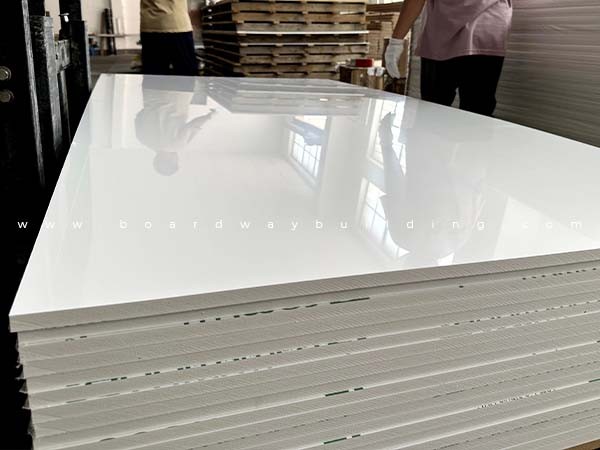
PVC Co-extruded Foam Board
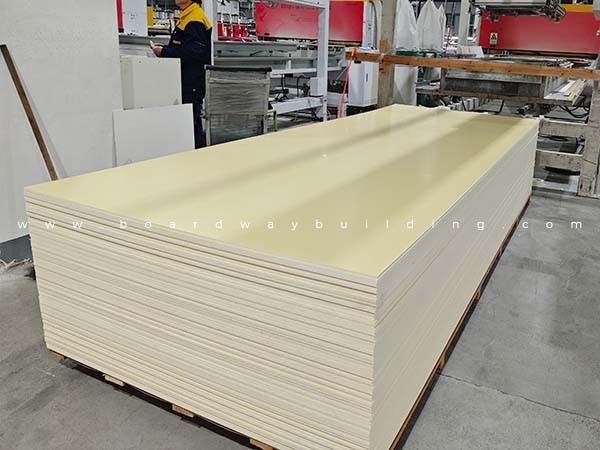
WPC Foam Board
1. What Is CNC Machining PVC Foam Board?
CNC machining uses computer-controlled equipment to cut, shape, drill, or remove material from a workpiece according to a programmed design. When applied to PVC foam board, it allows manufacturers to produce components with defined dimensions, openings, grooves, recesses, and custom contours.
Compared with manual processing, CNC machining can help improve repeatability when producing multiple parts from the same design. It is particularly useful for custom orders, complex shapes, and components that require several machining operations.
PVC foam board is available in different formulations and structures, including expanded PVC foam board, Celuka PVC foam board, and co-extruded PVC foam board. These products may differ in surface structure, density, and internal characteristics. Therefore, a board that performs well in one machining application may not necessarily produce the same results in another.
Before starting production, manufacturers should consider both the requirements of the finished component and the characteristics of the selected PVC foam board.
2. What CNC Machining Processes Can Be Used on PVC Foam Board?
Different CNC operations can be used to turn PVC foam board into finished or semi-finished components. The appropriate process depends on the part design, required features, and intended application.
CNC Cutting
CNC cutting is used to separate PVC foam board into individual parts or cut it into specific outlines. It can accommodate rectangular components, irregular shapes, and custom-designed panels.
For furniture and cabinetry manufacturers, CNC cutting can help produce cabinet components, decorative panels, and other parts according to digital drawings. It is also useful when multiple components must be cut from a sheet.
The cutting process should be evaluated not only by dimensional accuracy but also by edge quality. Rough edges, burrs, or damaged surfaces may require additional finishing and can affect the appearance of the final product.
CNC Routing
CNC routing removes material from the board to create contours, grooves, slots, recesses, and other shaped features. It is useful for components that require more than a simple straight cut.
Depending on the design, routing can produce decorative patterns, recessed areas, connection features, and custom profiles. It can also be used to prepare board components for subsequent assembly.
When selecting PVC foam board for routing, manufacturers should consider the required surface finish and the condition of the machined edges. The suitability of a particular board should be confirmed through machining trials when the component has demanding design or appearance requirements.
CNC Drilling
CNC drilling creates holes in predetermined positions. These holes may be used for fasteners, fittings, assembly connections, or other component features.
Accurate hole positioning is important when multiple parts must align during assembly. However, the quality of a drilled hole depends on the material, tool condition, workpiece stability, and machining setup.
For components that will be assembled with screws or other mechanical fasteners, hole dimensions and positions should be checked against the design requirements. The board's ability to support the intended fastening method should also be evaluated separately from drilling accuracy.
CNC Pocketing
CNC pocketing removes material from a defined area to create a recess or cavity without cutting through the entire board. This operation may be used for recessed features, component fitting, or design details.
The depth and shape of a pocket must suit the intended component. Manufacturers should also consider the remaining material thickness and whether the finished part needs to withstand mechanical loads or support additional components.
For any of these operations, a successful machining process begins with a suitable board and a clear understanding of the finished part's requirements.
3. Common CNC Machining Issues and What to Check
If a PVC foam board component does not meet the required finish or dimensions, the cause may involve the material, tooling, machining setup, or digital design. Checking these factors systematically is generally more useful than assuming that one adjustment will solve every problem.
Rough or Uneven Edges
Rough edges may result from unsuitable cutting conditions, tool wear, board characteristics, or insufficient workpiece stability. Different board structures may also produce different edge appearances after machining.
What to check:
Inspect the cutting tool for wear or damage. Confirm that the board is securely supported during machining. Examine whether the selected board is suitable for the required edge finish. Review the machining setup and compare results from a controlled trial.
In general, thicker boards provide better structural performance, while thinner boards are preferred for lightweight and decorative applications.
Burrs or Edge Fraying
Unwanted material along the cut edge can affect appearance and may require additional finishing. Possible contributing factors include the cutting tool, machining conditions, and the characteristics of the board's surface and core.
What to check:
Inspect the edge after a test cut and determine whether the issue is consistent across the sheet. If the problem occurs only in certain areas, check for differences in the board surface or local material condition. Adjustments should be verified through another trial rather than applied to an entire production batch immediately.
Chipping or Surface Damage
Chipping or local damage may occur when machining near an edge, cutting narrow features, or processing components with limited support. Board structure and the geometry of the finished part may also influence the result.
What to check:
Review the part design, edge distances, workholding method, and machining sequence. For parts with narrow sections or intricate contours, a sample run can help determine whether the design or processing approach needs to be revised.
Melting Marks or Heat-Related Defects
PVC foam board may show heat-related surface marks under unsuitable machining conditions. Possible factors include friction, tool condition, cutting conditions, and insufficient removal of machining debris.
What to check:
Inspect the tool and the machined surface, and review the overall machining setup. Do not assume that increasing or decreasing a single parameter will always resolve the issue, because the appropriate adjustment depends on the equipment, tooling, and material being processed.
Inconsistent Dimensions
Dimensional variation can affect assembly, especially when components must fit together or align with other parts.
Potential causes include inaccurate design files, incorrect machine setup, movement during machining, tool-related issues, or variations in the material.
What to check:
Verify the drawing and CNC program, inspect the workpiece positioning, and measure the first finished part before continuing with a full batch. For components requiring close dimensional control, establish suitable inspection criteria before production begins.
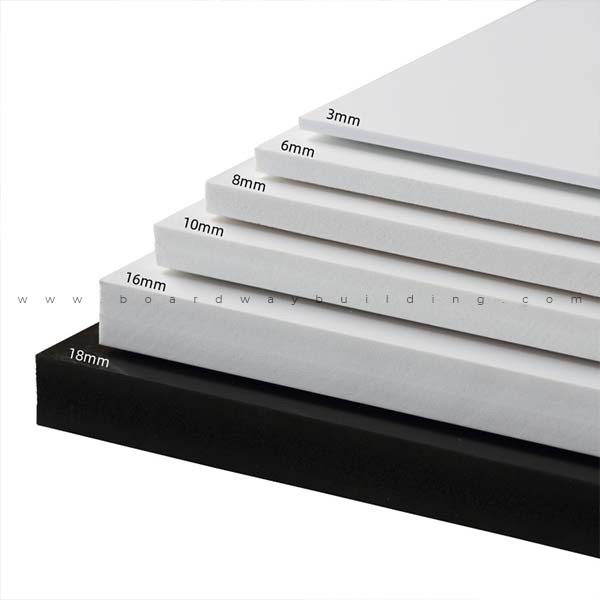
PVC Foam Board Thickness
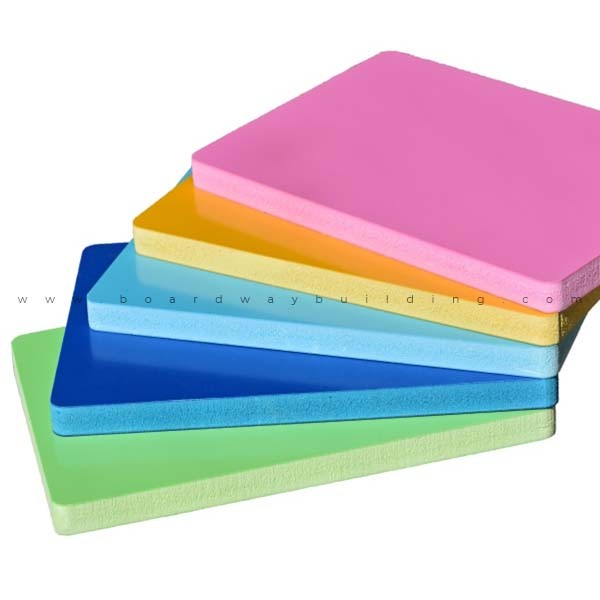
Colored PVC Foam Board
4. How PVC Foam Board Properties Affect Machining
Not all PVC foam boards behave identically during CNC processing. Selecting material based on the intended application can help manufacturers avoid unnecessary adjustments and improve the likelihood of obtaining the required finish.
Board Type and Structure
PVC foam board is available in several structures, including:
Expanded PVC Foam Board: A lightweight board used in applications such as signage, displays, and various fabricated panels. Celuka PVC Foam Board: A product with a denser outer skin and a foamed interior, often selected when the surface characteristics and rigidity suit the application. Co-extruded PVC Foam Board: A board produced with different material layers or surface and core characteristics through co-extrusion.
These structures can differ in surface appearance and machining behavior. The most suitable type depends on the component design, finishing requirements, and intended use. It is best to evaluate the actual product rather than assume that one structure is universally superior for CNC machining.
Thickness and Density
Board thickness affects the design of cut-through features, recesses, and pockets, as well as the amount of material remaining after machining. Density can influence the board's weight and mechanical characteristics, which may in turn affect its suitability for a particular component.
Manufacturers should select thickness and density according to the required part geometry, rigidity, fastening method, and end-use conditions.
Surface Requirements
Some components require only functional edges, while others need a clean, consistent appearance because the machined surfaces remain visible in the finished product.
If the component will be painted, laminated, bonded, or otherwise finished after machining, the material should be evaluated for compatibility with the intended finishing process. Any preparation requirements should be confirmed with the relevant material and finishing suppliers.
Material Consistency
Consistent board thickness, surface quality, and internal structure can help make machining results more predictable across a production batch.
For repeat orders or large-volume manufacturing, it is useful to confirm that the selected specification is maintained between batches. A sample inspection before mass production can help identify potential differences early.

PVC Foam Board for Advertising
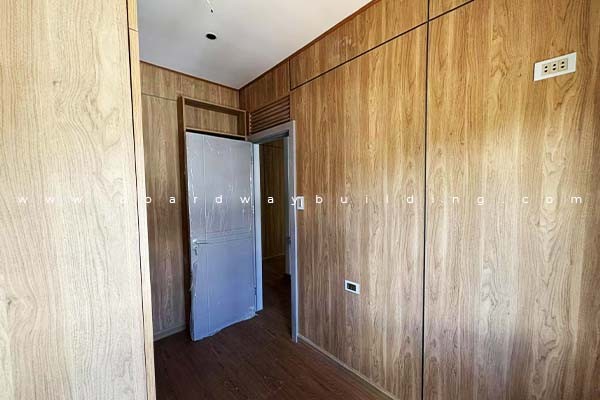
PVC Decorative Panel
5. Preparing PVC Foam Board for CNC Fabrication
Good preparation helps reduce avoidable machining problems and provides a more reliable basis for evaluating the finished component.
Inspect the Material Before Machining
Check the board for visible surface damage, unevenness, contamination, and other defects that may affect the finished part. Confirm that the board type, thickness, and other agreed specifications match the order requirements.
If appearance or dimensions are critical, inspect representative samples before processing the full batch.
Secure the Board Properly
The board should be adequately supported and secured to prevent unwanted movement during machining. Insufficient support may affect edge quality, hole positioning, and dimensional consistency.
The workholding method should suit the board size, thickness, shape, and machining operation.
Check the Design and CNC Program
Before production, confirm that the drawing and machining program correspond to the latest approved design. Review part dimensions, hole positions, cut-through areas, grooves, and recesses.
For components that fit together during assembly, it is also important to check the relationship between individual parts rather than inspecting each component in isolation.
Run a Trial Before Full Production
A trial run allows manufacturers to evaluate how the selected PVC foam board performs under their own equipment and processing conditions.
This is especially important for new designs, unfamiliar board specifications, intricate shapes, or parts with demanding surface requirements.
Inspect the First Finished Part
Measure the first part and inspect its edges, holes, contours, and machined surfaces against the agreed requirements. If the component requires further assembly or finishing, check whether the machined features are suitable for those subsequent operations.
Once the result has been verified, the same inspection criteria can be used to monitor consistency during production.
6. Applications of CNC-Machined PVC Foam Board
CNC machining can support the production of a wide range of PVC foam board components. The actual suitability of the material depends on the product grade, component design, and end-use requirements.
Furniture and Cabinet Components
CNC-cut and routed PVC foam board may be used to produce selected furniture panels, cabinet components, and custom-shaped parts. Drilled holes and routed features can support assembly and component integration.
When choosing board for furniture manufacturing, buyers should consider the required rigidity, fastening method, surface finish, and conditions in which the finished furniture will be used.
Signage and Display Components
PVC foam board is used in signage and display applications where lightweight panels and custom shapes are required. CNC cutting and routing can help produce lettering substrates, display panels, shaped signs, and other fabricated elements.
The board specification should be selected according to the intended display environment and any additional requirements for printing, painting, or surface finishing.
Custom Fabricated Panels and Parts
Manufacturers may also use CNC machining to produce custom panels, inserts, templates, and other parts designed for specific projects. Digital cutting and routing can be particularly useful when a design includes irregular outlines or multiple features.
For custom orders, it is helpful to provide the supplier with the required dimensions, drawings, thickness, board type, surface requirements, and intended application. This information supports a more informed material selection and sample evaluation process.
7. How to Choose PVC Foam Board for CNC Machining
Choosing the right PVC foam board begins with the finished component, not simply the machining method.
Before purchasing material for CNC fabrication, consider the following factors:
For new projects, testing a sample under the intended processing conditions is a practical way to assess machining performance before committing to larger quantities.
At Boardway, we supply PVC foam board in different types and specifications for a range of fabrication and manufacturing applications. If you are sourcing material for CNC-machined components, share your required thickness, board type, application, and relevant drawings with our team so we can help you identify a suitable product for evaluation.
FAQ: CNC Machining PVC Foam Board
1. Can PVC foam board be CNC machined?
Yes. PVC foam board can be processed using suitable CNC equipment for cutting, routing, drilling, and pocketing. The results depend on the board specification, part design, tooling, and machining setup.
2. What is the difference between CNC cutting and CNC routing PVC foam board?
CNC cutting is commonly used to separate the board into parts or produce specific outlines. CNC routing removes material to create contours, grooves, recesses, and other shaped features. The appropriate process depends on the component design.
3. Does the type of PVC foam board affect CNC machining results?
Yes. Expanded, Celuka, and co-extruded PVC foam boards may have different surface structures and material characteristics. These differences can affect the finished appearance and suitability for particular components, so testing the selected product is recommended.
4. Why do PVC foam board edges become rough after CNC machining?
Rough edges can have several possible causes, including tool condition, machining conditions, workpiece stability, and board characteristics. Inspecting the material and machining setup can help identify the cause.
5. How can manufacturers improve consistency when CNC machining PVC foam board?
Start with consistent material specifications, verify the design and CNC program, secure the board properly, and inspect the first finished part before full production. For repeat orders, use consistent inspection criteria and check material consistency between batches.
6. How should I choose PVC foam board for a CNC machining project?
Consider the application, board type, thickness, density, required features, surface finish, and assembly method. For new designs or demanding requirements, evaluate a sample under the intended processing conditions before ordering in bulk.
Conclusion
CNC machining makes it possible to fabricate PVC foam board into custom components for furniture, signage, and other manufacturing applications. Achieving suitable results requires a combination of appropriate material selection, sound preparation, controlled processing, and inspection.
Rather than relying on a universal set of machining parameters, manufacturers should evaluate the actual board and confirm performance using their own equipment and production requirements. This approach helps identify potential issues early and supports more consistent results when moving from sample production to larger orders.
If you are looking for PVC foam board for CNC fabrication, contact Boardway to discuss your application and material requirements.
- Want to learn more about PVC foam boards? Visit our PVC Foam Board main page.
- READ MORE